Posts Tagged ‘writing advice’

Sometimes, Don’t Write: Tarot Writing Advice

TEN DAYS AGO, MY BRAIN FELT LIKE TWO STONES RUBBING TOGETHER. That is to say, after meeting several breathtakingly rushed editing deadlines, I was exhausted. Or, the part of my brain that generally delights in pulling creative writing solutions out of my head like an entire warren of rabbits from an extra-tall magician’s hat? That part was exhausted. So, I was not surprised that the Four of Swords appeared during my daily draws that week.

Tarot speaks

As you can see, the Four of Swords suggests a time out, a long winter’s nap, a little chill-time—in a medieval crypt, if you can’t find any other quiet place to rest your noggin.

And since the tarot Swords suit relates to mental activity, it also suggests we writers may want to take a break from writing, in particular. Which I did. And, as this post attests, ten days later, I’ve hauled my concrete cranium off that sarcophagus, looked around, and discovered my writing mojo waiting for me to grab it—like the swords hanging over our maybe-dead guy’s (very pretty) head.

So, yeah, sometimes, if you’re exhausted and your pretty head needs a break, maybe don’t write. Maybe read, instead. Or watch a movie. Or go to an art museum and poke around. Whatever will refresh those gray cells of yours so they can happily get back to work on your novel … or memoir … or doctoral dissertation.

On the other hand, sometimes we need more than a vacation from our work-in-progress. Sometimes we need something along the lines of an epiphany—if not an entire paradigm shift. It may be that our story has stalled, not because we’re out of gas, but because we’ve lost hold of the invisible silken thread that’s been guiding us through the forest of our writerly unconscious. Or because we’ve suddenly recalled something we suspect will seriously upset one or more people who might read the memoir we’re drafting. Or because we’ve discovered something in the course of our research that completely upends the foundation of our thesis.

In all of those cases: uh-oh!

Then, rather than taking our cue from sleepy-headed Mr. Four of Swords, we might look to The Hanged Man for guidance. The Hanged Man’s reversed position allows him to see things differently. And the fact that he’s tied to that tree ensures he’ll be hanging out there until the needed insight dawns.

So. While no one here’s suggesting you strap yourself to a branch and swing upside down, sometimes, when your project’s come to a complete halt, don’t write. Instead, daydream, or talk with a counselor, or reconsider your understanding of your topic, to name just a few potentially illuminating strategies.

Then, when your own halo of insight lights up, you can haul yourself upright and put your refreshed perspective back to work on the page.

Thanks to U.S. Games Systems for use of images from the Rider-Waite Tarot Deck.

Tarot Writing Prompt: A Horse to Water

SOMETIMES, A CHARACTER NEEDS A SWIFT KICK in the “but” to get going. Maybe he wants to quit his soul-sucking corporate job and study journalism, but the golden handcuffs of his benefits hold him back. Or maybe she wants to volunteer with Doctors Without Borders, but her family’s conservative values give her pause.

A main character who hears—but ignores—the call of their story is known as a “reluctant hero.” Their motto? “I know I should, but …” Whatever their road to adventure, they’ll find a “but” to avoid it. When you have a character like that to manage, Dear Writer, you just have to take matters into your own hands.

Tarot writing prompt

Find a reluctant hero. Perhaps you have one waiting in the wings! Give them a concrete goal (to adopt a child? run a marathon? start a cat rescue?)—but not enough motivation to act on it.

Now, write a scene in which they demonstrate (and justify) their reluctance.

It’s late. Jenna passes the feral cat colony on her way to the mailbox. Wary eyes shine out at her from the bushes. Recently, she has noticed the cats seem thinner. She would love to help, she really would, but … There are so many animals in need, so many cats, and she’s just one person. Exhausted by the mere thought of yet another responsibility—on top of the kids, the overtime, the house that needs painted—Jenna grabs her mail and heads back, making sure not to glance at the bushes.

Next, create circumstances that kick your hero right in their “but.”

Jenna’s foot clunks against something. A plastic bowl. She picks it up and sees it’s filled with kibble. Someone must be feeding the cats, she thinks, relieved. And then she smells it. A chemically, garlicky odor. Stepping under the streetlight, she looks again. The kibble has been sprinkled with white powder. Rat poison, unless she misses her guess. And with that, Jenna feels the soft, heavy weight of the lives of dozens of cats descend upon her shoulders. Like it or not, it seems it’s up to her to save them.

THE PRECIOUS CHILD: Like Jenna, even the most reluctant of heroes is likely to jump into action if something they value—something that can’t fight back—is threatened. The literary term for that “something” is “precious child.” This might be an actual child, or it might be an adult whose spiritual or political beliefs make them vulnerable. It could also be a family home under risk of foreclosure, an imperiled natural environment, or a member of an endangered species, to name just a few possibilities.

As writers, we manipulate our characters however we must to get them fully committed to their story—even if that means putting out a bowl of fictional poison or dropping a lit cigarette in the dry brush at the edge of a fictional old-growth forest. But once they’re committed? We can only hope our heroes outgrow their reluctance and learn to meet the challenges of their story head on!

This post was inspired by The Chariot card of the tarot, which advises us to focus on our goals and harness our will to achieve them. In this version of The Chariot (cleverly combined with the Seven of Spades/Swords), from THE ILLUMINATED TAROT, by Caitlin Keegan, published by Penguin Random House, two horses, representing the “horsepower” of focused will, have left the confines and comforts of the barn and are joining dynamic forces to achieve new aims. (Image used by kind permission of Caitlin Keegan.)

Tarot Writing Prompt: Doing It in the Dark

HERE IN THE NORTHERN HEMISPHERE, IT’S FALL, the season of harvest, which rolls steadily into winter, the season of hunkering down, of mending nets, of dreaming in the dark. And what if, under the spell of that winter, in all that dark, during all those long, quiet hours, a dream should catch fire in the belly of the dreamer? Then, like a three- or four-months ripening womb, what was once just a glimmer will start to show in spring, that season of surging rivers, of buds swelling on what were just skeletal branches the day before.

But if that dream happens to be a big writing project? A novel? A memoir? A collection of short stories? Then be prepared: That quickening may take a while. The writing life has its own seasons—among them, a dark incubation, a time when a project may seem to have gone retrograde, to have lost its purchase. That season is the writer’s winter, the quiet dark in which a writing dream twists and threatens to slip between the fingers of our unconscious.

In her essay Angst and the Second Book,from her collection THE OPPOSITE OF FATE, Amy Tan writes about the lengthy gestation of her second novel, THE KITCHEN GOD’S WIFE, during just such a writer’s winter.

Each morning . . . I would dutifully sit at my desk, turn on the computer, and stare at the blank screen. . . . I wrote with persistence, telling myself that no matter how bad the story was, I should simply go on like a rat in a maze. . . . And so I started to write . . . about a woman who was cleaning a house. . . . After thirty pages, the house was tidy, and I had found a character I liked. I abandoned all the pages about the tidy house. I kept the character and took her along with me to another house. I wrote and then rewrote, six times, another thirty pages, and found a question in her heart. I abandoned the pages and kept the question. . . . I wrote and rewrote one hundred fifty pages and then found myself at a crisis point. The woman had turned sour on me. . . . I felt like the rat who had taken the wrong turn at the beginning and had scrambled all this way only to reach a dead end.

Tan goes on to talk about many other dead ends she found on her eventual way to THE KITCHEN GOD’S WIFE. She counts seven attempts. Among other morals we could take from the essay is this: A big writing project can take a long time to ripen. During this time, it may look like nothing (or less than nothing!) is happening, but on the inside, things are shifting, developing, taking shape. Given enough time and space, the big writing dream may well grow into something recognizable.

Tarot writing prompt

During these dark months, take time to slip beneath the holiday glitz and glitter and listen to the fluttering hopes of stories that might want to dream themselves awake in spring. Prepare the soil for those that will settle and take root. Listen in the dark for their tiny voices. Jot down what you hear. Keep your notes safe in the quiet of your own heart, until you feel one or more of them stir. Then fertilize, water, and make space for them to grow.

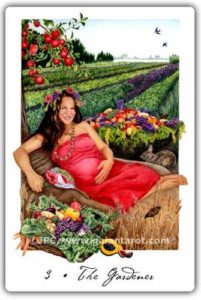
6a00d8341cfb6453ef0134864fecba970c-500pi

This writing prompt was inspired by The Empress of the tarot deck (shown here as The Gardener, from Joanna Powell Colbert’s Gaian Tarot). Tarot’s Empress is associated with fecundity, fruitfulness, harvest, and pregnancies of every kind—and with the patience and nurturance it takes to bring those pregnancies to term.


Tarot Writing Prompt: Wishcrafting

WRITE IT DOWN, MAKE IT HAPPEN. That’s the title of my favorite self-help book. Written by Henriette Anne Klauser, the book is crammed as full as a Whitman’s sampler with stories of people making their own magic—just by writing down what they want.

For instance, one woman, given short notice to leave her apartment, created a wish list: two bedrooms, two bathrooms, a garage (with an automatic door opener), a view of Puget Sound, and, finally, “someplace quiet; beautiful and pristine.” She found her ideal living space within days of writing down her desires.

Of course, for every story like that, we’ve all heard one that sounds more like: “Oh! I should have specified to the Universe that I want neighbors who love Bach fugues, not Eagles of Death Metal!”

Hence, the caveat, “Be careful what you wish for.”

But no need to caution your fictional folks! No, sir! Our job as writers is to get our characters into as much trouble as possible. And there’s no trouble quite so engaging as that which a character brings on herself (a poorly considered wish being just the thing to attract a wasp’s-nest worth of mess!).

Dr. Klauser’s approach, though, invites us to step beyond mere wishing. Putting our wishes into writing gives them focus, she says. It transforms our pen into a magic wand of manifestation—and us into agents for our own change.

Tarot writing prompt

Give your character a problem to solve. When she conjures up a big wish in response to that problem, get her to write it down—and then, dear Writer Magician, make your character’s written desire so. For better. Or for worse.

the_magician__taro_by_mari_na-d3csp6xThis writing prompt was inspired by The Magician of the tarot deck. The Magician is a master of manifestation—and a charmer, to boot. Ruled by Mercury, the winged god of communication, The Magician is a real sweet talker, Betty Crocker, and has been known to sell those under his spell a bill of goods.

Sometimes Art . . .

12191752_796580270470921_1313248362431253998_nDSCN0534IF REVISION* WERE A DOG, it would wear a hat and be foolish in public, because revision would want to get the most DOG out of each moment that it could. If revision were a fish, it would be out of water and dragging its school behind. If revision were an interior decorating scheme, it would cry out for spangle-y pinks and purples—unless it wanted the heat of reds and oranges—unless it wanted the cool underwater of blues and greens.

Sometimes art is the answer—but sometimes it’s revision. Sometimes it’s about seeing your work-in-progress as so many puzzle pieces, which you have to turn and match and try to fit. But sometimes it’s about diving deeper.

Sometimes revision wants to be smacked around, which can be a little scary—unless you have a safe word, and sometimes revision does have a safe word, in which case, it’s okay to play rough, which, sometimes, revision likes.

Revision’s about re-visioning, it’s about looking at what you’ve already done and asking what else you can do. But revision’s not “editing.” If writing were an injury, revision would be surgery, not massage.

Revision is a bit of a shepherd’s crook, tugging you off the stage when you think you’re ready to be out there. Revision knows when you haven’t fully paid your dues. Revision wants you to work harder—it’s stubborn like that. But revision will reward your work with a bag of gold so full you’ll be able to scatter coins far and wide, feeding the entire populace of your life—once you’ve done what revision wants you to do.

* * *

* The art illustrating this post is a before-and-after of a piece I created in one of my art journals. It’s easy, often, to get stalled at an early stage of a piece of art or a piece of writing. Difficult, sometimes, to push through to the next level. Risky, always, to do so.

I’m grateful to Tammy Garcia—creator of Daisy Yellow Art and the extraordinary Daisy Yellow Facebook group—for her continuing inspiration. The lessons I’ve learned from Tammy and crew have helped me be more courageous on the page.


Stylin’

SOMETIMES, WE ALL NEED STYLE HELP. Fortunately, there are many online resources that help writers (and editors) write right. (Sorry.) Here are a couple to get you started.

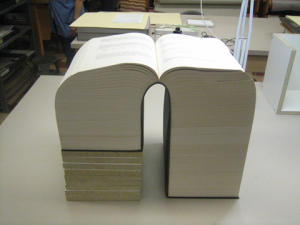
The staff of the (daunting) CHICAGO MANUAL OF STYLE knows how much their style guide weighs (oof!)Huge-book—and how time-consuming it can be to search its seemingly endless pages for a simple guideline. Taking pity on those of us who’ve yet to bite the bullet and subscribe to CMOS online, Carol Fisher Saller (aka, The Subversive Copy Editor) wrote a CMOS Shop Talk article about using “the online edition to find things in the print edition even if you don’t subscribe online.” Save your back. Check it out.

The Online Writing Lab (OWL) at Purdue University also provides free writing resources—including both Modern Language Association (MLA) and American Psychological Association (APA) style guides—to users worldwide.

Got a different fave? Drop me a (not necessarily correct) line with the 411.

Mark Winton, CJL and Plot-Clocker!

HERE’S THE SKINNY ON THE PLOT CLOCK: It’s a four-act “map” of a story, which can describe both the experiences a character is likely to undergo and her likely responses to those experiences. That’s it, in a nutshell. But time and time again, people’s applications of the Plot Clock have surprised and impressed me.

This was the case with Dr. Mark Winton, Criminal Justice Lecturer at UCF, who wrote, after a recent Plot Clock presentation, Thank you for the fascinating workshop. I was not familiar with the Plot Clock, but it made complete sense when I started thinking about an academic piece I am working on, where I trace the lives of two genocidal perpetrators and what led to their outcomes. It is really a useful model in studying how people become criminals.

Wow! Right?

To learn more about Dr. Winton’s work, visit his YouTube channel, Understanding Violence, where he discusses, among other topics, serial murder, sex crimes, and profiling.

Want to know more about the Plot Clock? We wrote the book on it! Check out PLOTTING YOUR NOVEL WITH THE PLOT CLOCK on Amazon.

* * *

Writing coach

Need help with your book? I’m available for book coaching and manuscript review!
Click to read Should I Hire a Writing Coach in THE WRITER magazine.

* * *

“You’ve Got a Book in You,” a Slam Dunk for Elizabeth Sims

RAISING ALL SORTS OF WOO-HOO! Congratulate ELIZABETH SIMS! Her fantastic Writer’s Digest Books title, YOU’VE GOT A BOOK IN YOU: A Stress-Free Guide to Writing the Book of Your Dreams, has entered its third printing since its publication in May, 2013. And Elizabeth, a Contributing Editor for WRITER’S DIGEST magazine, was named June’s Instructor of the Month at WD online!

Elizabeth writes the Lambda Award-winning Lillian Byrd Crime Series, as well as the Rita Farmer Mysteries. Check out her blog, Zestful Writing, or visit ElizabethSims.com.

* * *

Writing coach

Need help with your book? I’m available for book coaching and manuscript review!
Click to read Should I Hire a Writing Coach in THE WRITER magazine.

* * *

Posted in News, Notes & Quotes | Comments Off on “You’ve Got a Book in You,” a Slam Dunk for Elizabeth Sims

1 4 5 6

Copyright ©2026 Jamie Morris LLC| Contact | Privacy Policies | Terms & Conditions