Posts Tagged ‘writing coaching tips’

Tarot’s Judgment: Your Writing Coach

When tarot’s Judgment card volunteers to be your writing coach, fasten your seatbelt! It’s time to rev up a manuscript you thought had breathed its last. We’ve all been there, right? (Or is it just me?) We give up on a “failed” manuscript. Then we push it as far away from ourselves as possible, leaving it to die an ignoble death.

But is it really dead?

Tarot’s Judgment card can coach a writer’s draft to life.

Tarot's Judgment: your writing coach is shown as a phoenix rising from the flamesJudgment, in tarot, is about rebirth. In this image, we see a Phoenix rising from the ashes. From the Judgment card’s perspective, we can see that our manuscript did not actually collapse into a pile of cold ashes. It just needed time to settle.

In WRITING DOWN THE BONES, Natalie Goldberg discusses “composting” our ideas. She says that with repeated attempts to express a concept or aspect of our lives, we’ll eventually develop a sort of critical mass of attention. And “something beautiful will bloom.”

This seems to me to be similar to the way we can focus sunlight through a magnifying glass and eventually set fire to a pile of kindling. (Please don’t try this at home!)

Tarot’s Judgment writing coaching moment

It’s been my experience that our ideas, gathered like tinder in the form of a draft, may lay dormant for longer than seems reasonable. In fact, having shoved the darned thing in a drawer or file, we swear we’ll never look at it again.

And then … one day … it calls out to us. Then, it’s time to bring out the magnifying glass and stare at our draft until it bursts into fiery new life. That moment when the twigs spark, that’s a Judgment card moment! When our book draft (finally) starts to kindle, though, we must be right there to fan the flames.

You see, Judgment may make the call. But we must to be ready to answer with a full heart—and faith that this time our book will be fully born from the flames.

Ready to (re-)commit to your book? A chat with a top writing coach might give you the boost you need!

When a writer is ready to tackle either a significant revision or an entirely new approach to their book, a professional writing coach can offer a perspective that will help them get traction right from the get-go. Would you like to discuss your project? Breathe new life into your book with Jamie Morris writing coach and tarot's Judgment card Schedule your free consultation.and check out Should I Hire a Writing Coach” in THE WRITER magazine.

Tarot’s Judgment Card as Your Writing Coach uses the image of Judgment from the ASTROMATRIX TAROT.

Unlock Writer’s Block

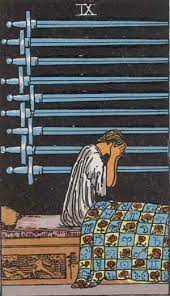
Oh, my gosh! Yolanda needs help to unlock her writer’s block! writer's block causes figure under nine swords to have a nightmareShe’s tormented by worries of failing as a writer—yet can’t get any words on the page. While she’s allowed swords of self-recrimination to stack up over her head, it’s probably not as desperate a situation as she believes.

Like many writers, Yolanda feels that if she’s stuck with her current project—short story, essay, master’s thesis—she’s “blocked.” But if she looked more closely, she might find she’s facing a more manageable problem.

In my wide experience as a writing coach, I’ve seen writers like Yolanda free themselves from the dreaded block quite quickly. They just need the right strategies.

If writer’s block is threatening, check out these common causes and their cures. You, too, may be able to unlock writer’s block and write with ease again!

Start here: Is it really a block?

At a crossroads? Maybe you’re actually just confused about what to do next. “Confusion” is not a block! It’s a reasonable response to the many paths a writer can take at any given moment. Uncertain of which way to go?

Try this: Pick any one possibility, set a timer for ten minutes, and write as if you were committed to that direction. If it’s not right, back up and try a different option.

Empty tank? Exhausted? Pushing forward when our creative tanks are empty is a sure way to grind writing to a halt. While fatigue is not necessarily a symptom of writer’s block, it sure can feel like it.

So, take note: Too tired to write? Give it a rest. Whether you need an hour or a week to recover your mojo, take it. Your restored future self will thank you.

Says who? Okay. Here’s the truth: I hate being told what to do. Maybe I’m alone in this. Maybe not. But I have noticed that when someone is writing a memoir because other people have told them to—“You’ve had such an interesting life”—the would-be writer generally loses interest at some point. Likewise with fascinating topics about which a person is an expert. Or when someone is naturally funny or a great story teller.

If you’re struggling to fulfill someone else’s literary ambitions for you, chances are good you don’t have writer’s block. You probably just don’t want to write a book. Or, at least, not the book other folks are telling you to.

Mix it up to unlock the block!

Pushing an agenda? When we come to writing with a too-tightly circumscribed agenda, we can write ourselves into a corner. Rather than trying to beat our project into obedience, we can play a bit. Free-writing on our topic can allow fresh ideas to surface, unlocking our writing progress once again.

Traveling the straight and narrow? New writers—particularly new novelists—may think their job is to start writing at the beginning and continue all the way to the end. Makes sense, right? But more often than not, this approach leaves them in a rut, wheels spinning.

Instead, imagine which scene might be the most interesting to write today. A novel is a long haul. Making it more fun makes it more likely you’ll actually get it done.

Play hopscotch! Rather than committing your focus to a single writing project, have two or three on the go. When you feel stuck with one, move to a different piece. Hopping from a stalled project to a fresher one is sure to reinvigorate your writing process.

I hope you (and Yolanda!) try unlocking your next bout of writer’s block with some of these strategies. While a little angst can make for interesting writing, I’ve found it’s best to keep most of the drama (not to mention the swords!) on the page, not hanging over our heads and  inducing nightmares.

Would you like some more writer’s (un)blocking strategies from a top writing coach?

As a professional writing coach, I’ve boosted writers at all levels of experience out of their  writing block slump. Maybe I can help you!unlock-writer's-block-with-Jamie-Morris-writing-coach Schedule your free consultation.and check out Should I Hire a Writing Coach” in THE WRITER magazine.

Thanks to U.S. Games Systems, Inc. for kind permission to use the image of the Nine of Swords from the RIDER-WAITE (SMITH) TAROT.

Two of Coins, Your Book Coach

When Ella called, upset that daily life was eating up her writing time, I knew just where to look for advice. Woman juggling two coins as book coach for balance“If tarot’s Two of Coins were your book coach,” I said, “she’d show you just how to keep all your priorities in play.”

The Two of Coins (aka the Two of Pentacles) has made multitasking a fine art! She juggles resources, makes time for multiple projects, and just generally finds balance amid her myriad obligations. Bottom line? There are only so many hours in the day, and it’s up to her to make the most of each.

So much to do!

As a book writer, Ella, like so many of us, struggles to make her time s-t-r-e-t-c-h. She’d like to work on her novel, sure. But she’d also like to help her daughter with her science homework, take the dog for a run, cook something nutritious for dinner, clean the bathroom—and finish the dratted report her boss tossed on her desk at the last minute!

Can she—or you, or me!—get it all done? Maybe? On a good day, perhaps. But the truth is that for many of us, a busy day shoves our writing to the curb.

Book coaching for busy folks

Out of necessity—life!!—the Two of Coins has developed five writing coaching strategies for herself. She uses them to keep her life in balance and get her novel done! These strategies can help you keep your book project alive and spinning with all the other plates you’ve got in the air.

That’s why, if you find yourself in a similar pinch as Ella, I recommend hiring the Two of Coins as your book coach!

Strategies for book writers

1) First things first: When the Two of Coins gets up each morning, the first thing she does  is grab her tablet and jam out 250 words on her novel. These are not (necessarily) good words. She might try out a bit of dialogue or describe a scene. But good or not, these words set her brain to thinking about her novel for the rest of the day!

2) Catch as catch can: My admirable client Jessica works on her novel in the pick-up line at her kids’ school. A couple of times a week, she grabs a half hour when all four kids are doing homework to add another scene or two. Be like Jessica. She makes steady progress in the spaces in-between.

3) Make a date: Find a critique partner whose life is as busy as yours. Meet monthly to exchange pages—and complain about how little time you have to write! This strategy, based on accountability and camaraderie, will give you both someone who cares that you are writing and who sympathizes with how hard you worked to get that writing done.

4) Buy or barter time: If you have kids—or an aged parent, or dogs, or a yard that needs mowing—could you hire a neighbor to help? Or exchange your skills for their time? If some neighborly support buys you even an hour or two a week for writing, you are the big winner.

5) Keep a book diary: End your day by jotting down notes about your book. Maybe you had a thought about plot or structure during your busy day. Or maybe your morning writing gave you a jumping-off place for tomorrow. Spend ten minutes before lights out noting your progress—and where you want to go next.

The Two of Coins, your book coach, gives you a high five—and says, “Keep going!”

Once you get the hang of prioritizing your book, you’ll discover your own strategies to help you get ‘er done. Keeping in mind that the best lives are full to the brim with family, friends, and good creative work, we can always rely on the Two of Coins’ book coaching to show us how to get it all done.

Would you like some insight from a top book coach?

As a professional book coach, I’ve helped many writers create a workable life/writing balance. Maybe I can help you!Jamie Morris Writing Coach Schedule your free consultation.and take a peek  at the article Should I Hire a Writing Coach” in THE WRITER magazine.

The beautiful image of the Two of Pentacles comes from THE MODERN WITCH TAROT DECK, published by Sterling Ethos.

King of Cups, Your Writing Coach

If Tarot’s King of Cups were your writing coach, he’d teach you to calm the troubled waters of your writing life. He rules a kingdom that is entirely fluid and in motion—and he’s had to learn how to maneuver in its emotional depths. It took him some time, but the King of Cups has matured into a person who can acknowledge his feelings without being overbalanced by them. And this is his gift to you.

King of Cups, your writing coachYou see, it’s his kingdom—of water and creativity and the unconscious—from which our dreams and our writing emerge. But when we enter his world, we must be prepared. Our writing can take us far from known shores. It can bring us into waters so deep we get the bends. But, whether we are writing memoir or fiction, those depths are where we are most likely to find pearls of great worth.

Writing coaching advice from the King of Cups: “B” is for “ballast”

So how do we make the best use of the King of Cups’ advice? Take on ballast! “Ballast” is defined as something that gives stability—certainly helpful when we’re about to tug on our scuba gear and slip backwards into the wild waters of our creativity.

One way to stabilize ourselves is to take on a daily writing practice. Our writing practice might look like Julia Cameron’s Morning Pages or Natalie Goldberg’s writing practice. We might use a journaling app or keep a quiet blog. However we choose to do it, writing daily can keep our ship steady as we navigate difficult shipping lanes.

The King of Cups might also suggest we have regular conversations on dry land. We can meet with other writers, sharing advice as well as telling harrowing tales of the tsunamis we’ve survived! We might also seek out a counselor or a 12-step or other supportive group. Sharing our experiences with others can help us find balance while we’re deeply engaged creating an imagined or remembered life on the page.

From his sea-tossed throne, our writing coach the King of Cups reminds us that the more we commit to our literary work, the more likely we are to be pitched about by internal squalls. He’d like us to prepare for those squalls—by having plenty of ballast at hand.

Would you like to discuss your writing process with a top writing coach?

I’ve worked with many deep-diving writers. I’d love to hear about your work and see if I can help. Jamie Morris Writing CoachI invite you to schedule a free consultation. You might also read Should I Hire a Writing Coach” in THE WRITER magazine.

Thanks to U.S. Games Systems, Inc. for kind permission to use the image of the King of Cups from the DREAMING WAY TAROT.

Tarot and Writing: Meet the Two of Cups, Your Writing Coach

Tarot and writing seem a match made by the very best of old-school matchmakers! The 78 images that make up a tarot deck can inspire writers in many ways. As a writer myself, as well as in my role as a writing coach, I’ve found looking at the cards can spark our creative writing, suggest a solution to a specific literary problem, or even propose a way out of a writing slump.

No matter what issue we’re addressing, it can be fun to draw a tarot card and see what it has to offer about our current writing journey. In this case, I drew the Two of Cups. Here’s what this smart card had to say.

Tarot and writing: the Two of Cups on your writing process

If the Two of Cups were your writing coach, two of cups and your writing processshe’d ask you to be loving with yourself and committed to your writing project. In this card, we see a union occurring, two people are joining their intentions for a higher purpose. Often read as the card of new love (or even infatuation), we can also understand this as a contract being pledged.

What if that contract is between you and your writing? What promises are you giving? And what do you expect in return? I’ve read that a relationship isn’t really a 50-50 proposition, but a 100-100 one. If our relationship is with our writing, then it follows that we need show up fully (hello, butt in chair!), even when our writing is slow to respond.

Also, as in all partnerships, patience is a thing. Consider Corinthians 13:4-8: “Love is patient, love is kind. It does not envy, it does not boast, it is not proud. It does not dishonor others, it is not self-seeking, it is not easily angered, it keeps no record of wrongs.”

If the Two of Cups were your writing coach, she might ask how you can apply these principles to yourself and the writing you love.

Want to talk about your writing with a top book writing coach?

I’d love to learn about your relationship to your writing project. As a professional writing coach, Jamie Morris Writing CoachI might have some helpful insights to share. Please click to schedule your free consultation. You might also take a look at the article Should I Hire a Writing Coach” in THE WRITER magazine.

Thanks to U.S. Games Systems, Inc. for kind permission to use the image of the Two of Cups from the RIDER-WAITE (SMITH) TAROT.

Posted in News, Notes & Quotes | Comments Off on Tarot and Writing: Meet the Two of Cups, Your Writing Coach

Writing a Novel Fast(er): 10 Tips!

10 Tips for Writing a Novel Fast(er)

Writing a novel is a long game, no way around it. But I’ve Jamie Morris Writing Coachhelped many writers get to THE END, and I know there are ways to shorten the curve. I’ve listed my favorite get-your-novel-written approaches below. From first concept to first draft, these tips will help writers get their novels onto the page.

Fast(er) novel-writing strategies

1) Think “draft,” not “polished manuscript.” We read published novels and see that they proceed from cleanly edited start to well-honed end. So it’s natural to imagine our book-writing process should follow suit. We decide to create a polished novel—complete with sharp prose, fully developed characters, and beautiful images—as we go.

But it’s actually much more efficient to write our novels as a series of tdrafts. On the first pass of your story, go rough. Next draft, revise to fulfill what’s missing from the first. And save the polishing for your final version.

2) Save editing for later. Rather than stopping to tweak grammar or manage a particular sentence, keep the words flowing! It’s important to get your story DOWN, and broad strokes will help you do that. Don’t want to risk losing your story-telling traction for an errant period or awkward bit of description. Come back and fine-tune later.

3) Make margin notes while writing your novel. Rather than editing as you go, add margin notes to your document. When you revise, these will act as a sort of breadcrumb trail, reminding you what you thought might improve a scene, character, or plot thread. It’s quicker—and less of a creative interruption—to make a general note to consider later than to halt your momentum to wrangle a specific passage.

4) 1000 words a day will get you there—fast! Does 1000 words seem like a lot? Too much?! What if I remind you that 1000 words is actually only four lit-industry standard pages? Does that make it seem more doable? 1000 words a day (even with weekends off), will net you a complete draft fast!

Map it out to write your novel faster

5) Outline your novel. Know where you’re taking your characters before you pack their bags and hit the draft-writing road. Just clarifying your major plot points will help. However, the more detailed your outline, the more quickly you’ll be able to complete your initial draft.

Some writers fear outlining will make their story feel contrived. My work with novelists has shown otherwise. The outlining process can be just as creative and deep as any other aspect of writing your novel.

Plotting your novel with the plot clock book

5a) “I’m a pantser,” you say? Okay! Go ahead; pants your way through your first draft. Before revising, though, outline what you have. That should help you see if you need to create better flow or more suspense or stronger character arcs.

My book, PLOTTING YOUR NOVEL WITH THE PLOT CLOCK, is a quick read and explains a basic approach to outlining your novel.

6) Hop around! Take the advice “Pick Only Ripe Apples,” from LIFE, PAINT, and PASSION, by Michele Cassou and Stewart Cubley:

To keep your process flowing, to feel the enjoyment of creation, you first need to go where it is easy. Easy means ripe. Go where you are attracted…. While you work on the part that is easy, other parts will mature in you, and they will be ready and waiting. You move step by step, from the easiest to the easiest. It is never tedious or tiring because there is no need to force anything. Depth resides more in surrendering to spontaneity than in hardworking struggle.

Apply this to writing your novel. Follow your instincts. No need to pick up where you left off. And if you’ve created an outline, you’ll never get lost in the dark woods of your story!

Set limits

7) Limit yourself to a single point of view. Sure, there are times when one point of view (POV) won’t get the job done. But a single POV story can be quite compelling—and surprisingly complex. Mystery phenom Tana French writes many of her best-selling novels from a single point of view—IN THE WOODS, for example. Her psychologically rich books have won critical and popular acclaim.

Multiple POVs require multiple character arcs—which is both complicated and time consuming. Want to fast-track your novel? Try focusing on a single POV character.

8) Write for just one hour. It can be a huge accomplishment to carve out time to write. And I’m suggesting you stop after just sixty measly minutes?

Yup. I am. Well-regarded artist Nicholas Wilton suggests we limit our creative sessions to an hour. That’s when we’re most effective, he says. I find this to be true. As I enter the second hour of painting or writing, I get circular in my thinking and tight in my expression—neither of which is conducive to making fresh and exciting work.

9) Walk daily. Many writers swear by their daily walks. Why? Walking gives us an oxygen boost. Also, a change of scenery can enliven our brains. And taking a walk can help us solve story problems. We set out for a stroll feeling stuck, only to return with the solution in hand.

10) Write your novel in November. “NaNoWriMo,” short for National Novel Writing Month, is a month-long, nationwide novel-writing fest that takes place every November! Participation is free—and knowing you’re part of a coast-to-coast cadre of novel writers will fill your tank.

For more ideas, check out these two articles: “How to Write a Novel” and “Plotting Your Novel: 5 Fabulous Tips.”

Would you like to discuss your book with a top writing coach?

I’m available to be your professional writing coach. Schedule your free consultation and check out Should I Hire a Writing Coach” in THE WRITER magazine.

How a Book Writing Coach Critiques Your Book

Jamie Morris Writing CoachWhether your book writing coach calls it a “critique,” a “review,” or an “evaluation,” they mean the same thing. Your coach will read your work and give you their professional feedback on essential elements of your manuscript.

But wait! Does that sound scary?

For many writers, the idea of a critique—no matter what term we use to describe it—can be anxiety-producing. If you’re worried about sharing your work with a professional writing coach, here’s something to keep in mind. Your coach is not assessing your work to judge you, but to help you achieve your writing goals! As part of your book-writing team, your writing coach has only one objective—to support you.

To support you effectively, when you hire a book coach, the first thing they’ll want to do is evaluate your book-in-progress. It doesn’t matter how far along your book may be. You might only have an idea for a book. If so, that’s fine! In that case, your book coach will work with you to develop an outline or a synopsis from that initial concept. Whatever you have in hand—an idea, an outline, a partial draft, or just a few chapters—your new coach will want to get a feel for where you are in your book-writing process.

This initial critique will allow them to give you feedback on what’s working and what needs further thought. And it’s a great way to get the writing-coaching ball rolling in the right direction.

What your book writing coach looks for …

Writing a novel?

Specifically, if you’re writing a novel, your novel writing coach will probably ask you for a synopsis, a character list, a rough plot outline, and a sample chapter or two. From these materials, your coach will be able to review your story for significant story elements. They will want to know, is your pacing tight and suspenseful? Do your characters’ voices support the general tone of your story? Is your main character facing enough of a challenge to create their all-important internal arc?

You and your coach will discuss these and other aspects of your novel-writing craft after their review of your materials. From there, you’ll create a road map of the path you’ll take as you complete your novel.

Writing a memoir?

While writing a memoir is surprisingly similar to writing a novel in some respects, your memoir coach will first want to consider the scope of your story and its focus.

Memoir vs. autobiography: You see, a memoir differs from an autobiography in two ways. An autobiography considers the entirety of a person’s life—from birth up to time of writing. It will be written chronologically, start to finish, and may well include quite a bit of information about the writer’s parents and other family members.

A memoir, on the other hand, considers either a limited period in a writer’s life or focuses on a single aspect of their life over a longer period of time. Because of these limits, a memoir might be effectively written in any one of a number of non-chronological ways.

Therefore, when they are assessing your memoir concept, your writing coach will want to know the timeline you’ve planned to develop: For instance, where does your story start and stop? Does it cover just your high school years? Your first ten years of sobriety? Or the six months you were in rehab after your accident?

They’ll also be interested in understanding how you are “framing” your memoir. For example, are you focusing your story on a specific event—like the summer you were a ball girl for your local AA baseball team? Or are you writing about a trait from childhood that you overcame in adulthood—like a debilitating fear of dogs?! Your memoir’s scope and focus will determine the outline, so that’s where your coach will start their critique.

Writing a nonfiction book?

If you’re writing a nonfiction book—especially an instructional book, like a self-help or how-to title—a chapter by chapter outline is the most efficient way to convey the organization of your ideas to your nonfiction book coach. This outline will guide you in your drafting process—and it can also form the basis of a nonfiction book proposal, if you choose to create one.

Add in a sample chapter or two, and your nonfiction writing coach will be able to “hear” how you’re addressing your audience. From there, you and your coach are well on your way to tweaking what needs to be tweaked and getting a good, solid draft—or book proposal—done.

Accountability partner + cheerleader!

In addition to reading and responding to your writing, your coach will act as your accountability partner, creating a regular meeting schedule and offering assignments to keep your book moving forward. Your writing coach will also cheer you up when you feel discouraged and cheer you on as you make strides towards completing the very best book you can write!

If you need support in finding a book coach, check out this article on how to find a writing coach. Also, check out Should I Hire a Writing Coachin THE WRITER magazine. If you are considering hiring a book coach, I’d love to invite you to schedule a free writing consultation. Let’s see how I can help!

Makes a GREAT Writing Coach?

What is a writing coach?

A writing coach is someone who helps writers get their books done! Part editor, part cheerleader, part story confidante, a coach is always, always on a writer’s side—and she is also someone who has the chops, knowledge, and experience to make her support effective.

Your writing coach is your smart, effective writing friend. Whether you’re trying to figure out which writing project to tackle next, how to plot your story, or how to even handle such a big commitment with so many other demands on your time, she will guide you forward confidently.

She’s traveled this road before, and knows how to get you where you’re going.

Jamie Morris Writing CoachWhile I’ve been helping writers for well over a decade, and have developed solid strategies along the way, I was curious: what makes a great coach? I asked this question of a dozen writers, including several well-published colleagues, a few clients, a literary agent, an editor, the head of a college writing program, and the creative director of a small publishing house.

If you’re in the market for a writing coach, you might keep their responses in mind.

What makes a great writing coach?

Tom Wallace, editor and ghostwriter: Contrary to what many new writers believe, the craft of writing—narrative writing, creative writing—is less an inborn talent than a collection of skills that can be learned. In my observation, the best coaches—great coaches—can not only hold multiple story and character ideas in their minds, but guide writers in applying the skills they need to make those ideas work. A great coach offers both their knowledge and their generous attention to a writer’s creative needs. Working with a coach is an investment in time and energy that can transform a writer’s creative journey and pay off for years to come.

Joyce Sweeney, award-winning author, former coach, literary agent with The Seymour Agency: I think, moving past the obvious skill of knowing the rules of good writing and how to apply them, the real talent a great coach brings to the table is to be able to read the client’s work and feel the intent. We have to know what this person is doing, why they are doing it, and what is important to them beyond what they have written. What do they uniquely have to say? What undeveloped gifts can we see traces of? We have to somehow see the finished project they are dreaming of, and work backwards from that to what they have put on the page so far.

Tam Cillo, Communications at Club CarWe all have our writing strengths and weaknesses. A good writing coach celebrates the former and helps improve the latter—and she creates an atmosphere of acceptance. When she reviews my writing, she is listening for my voice, my personality. This means she sees what’s possible in even the roughest pieces. Like my favorite scuffed sneakers, my work doesn’t need to be pristine, like out-of-the-box white Keds for her to see the potential. 

A great writing coach does more than encourage, though. She helps me set goals—and stick to them. She knows that the art of writing takes more than creativity, that I must continue to develop my skills. And when I get stuck, she’s a motivator who helps me move the roadblocks and continue on the way toward my success. 

Elizabeth Sims, award-winning author, contributing editor at WRITER’S DIGEST magazine: The best coach is first a listener. Tell me your troubles! Then, a permission-giver. It’s OK for you to feel anxious when you do new things. It’s OK for you to screw up! In fact, it’s required! Then, a combination wrecking ball and new puppy. Let’s blast through obstacles without much thought! Let’s make friends out of troubles we can’t break apart! Love the storm and sunshine equally! What a journey!

Reverend Rebecca M. Bryan, minister at First Religious Society, Unitarian Universalist: A great writing coach is someone whom you trust implicitly to guide you on the right path. She always tells the truth and holds the success of your work as paramount importance. She’s a consummate professional, who has a way of being kind to your spirit and entirely honest at the same time. Her critique and redirection always resonate and nudge you to the next right step in your writing, while her encouragement is ever-present. You trust her with your craft, which is to say you trust her with your heart and your professional path.

Peg Loves, writer: I had four developmental editors before I realized what I needed was a writing coach. Through my many sessions I’ve found these attributes to be what makes, for me, a great writing coach:

  • She’s an incubator for ideas. I have brought twigs of ideas into a meeting and left with the frame for a tree house.
  • She’s an advocate—a champion of the work and ally to my goals. When she pushes back on an idea, but changes her opinion after being led through my thought process, I know I have an advocate. When she doesn’t let me avoid something hard that I’m fully capable of doing, I know I have an advocate.
  • She has the breadth of a developmental editor and the depth of an investigator, willingly jumping in to help me untangle weak points and suggest strong threads to braid into the story.

I believe, though, part of what makes a writing coach great is the writer. Are you open-minded? Are you clear on your goals? Are you ready to deep dive into the work? Finding the right writing coach is much like dating, trying out personalities, finding which one fits best to foster your productive and fruitful work.

Ryan G. Van Cleave, author, Head of Creative Writing, Ringling College of Art and Design: Why do you need a writing coach?

  • To stop floundering
  • To save years of heartbreak
  • To shorten the learning curve
  • To help develop an appropriate, effective platform
  • To create a clear direction for your writing efforts and career

The best writing coaches aren’t just editors—they’re guides to the wider world of reading, writing, and publishing. A great writing coach will help identify what’s holding you back, troubleshoot specific writing projects, and offer insider-industry advice to create a pathway to the future you want in the world of writing.

MK Swanson, writer: A great writing coach is …

  1. A cheerleader to speed you to the goalpost.
  2. A best friend for delivering truth gently.
  3. A concierge on whose efficiency you can depend.
  4. A masseuse with whom your creative muscles relax.
  5. A drill sergeant by whose orders your story gets stronger.
  6. A trail guide to lead you past the brink of madness.
  7. A magic hat from which to pull rabbits.

Teri Saveliff, author of SIGNATURES: If you ask a friend, even a well-qualified friend, to judge the quality of your work, you will likely get a supportive but not necessarily accurate response. A good writing coach will tell you the truth. A great coach will tell you the truth in a way that encourages you to jump in and make the changes that will benefit your story—even, or especially, if these are big changes.

If you’re like me, you love words and have an easy time putting them on paper. But maybe the overall arc of your story is weak. A writing coach can tease out the story lines you may have buried in pretty language and give your work some true substance. She can also work her magic on unlikable protagonists and improbable plot lines. Ready to take it to the next level? Consult a writing coach.

Hanna Kjeldbjerg, creative director at Beaver’s Pond Press: When I’m looking to connect authors with a writing coach, the number one thing I look for is heart. Writing is so personal, and manuscripts are oftentimes an extension of ourselves. It’s true that authors need writing coaches for accountability, organization, and an objective eye to help with structural elements like narrative arc. But more than that, writers need a partner who understands their vision for their book, who feels like a friend.

My favorite editing quote is “Editing fiction is like using your fingers to untangle the hair of someone you love” (Stephanie Roberts). A relationship with a great writing coach should feel like that.

Megan Cooke, writer, animator, graduate Ringling College of Art and Design Creative Writing Program:

  • Great writing coaches don’t just tell you to fix something, they explain how to reach your solution.
  • Prioritization and organization are huge—a great coach will help you focus on what matters most.
  • A great coach should have your future readers in mind. They’ll catch things that will be confusing or unsatisfying to your audience.
  • Your coach should know what hard decisions need to be made. A coach can help you make tough decisions—sometimes even suggesting “killing your darlings”—that will benefit your entire story.
  • A good relationship between you and your coach makes all the difference. Our stories can be very personal, and a great coach will understand what matters most to you. They will encourage you and push you to produce your best work.

Scott Dobbins, aspiring futurist; founder/CEO, Hybridge: Any writing coach must have the experience and knowledge to provide perspective and insight to their writers. But that is just a part of it. A great writing coach must have the ability to engage with their writers on many levels—personally, intellectually, and spiritually. This forms an authentic bond, one rooted in mutual trust and respect.

With this foundation, a great coach may be empathetic and supportive in one session and no-nonsense and directive in another—whatever the project and writer require at the time. A great writing coach knows when to push you and how to pull it out of you. They are both your cheerleader and your challenger, your accountability partner, and your friend.

Looking for help with your book or writing project?

I’m available for writing coaching and book coaching! Also, check out Should I Hire a Writing Coach” in THE WRITER magazine.

* * *

Image of “The Coach,” from BASEBALL TAROT, by Mark Lerner and Laura Philips, illustrations by Dan Gardiner.

5 Writing Workshop Pitfalls

Oh, writing workshops! How we love and hate you!  A group of talented folks come together to discuss one another’s writing. What could possibly go wrong? Any one of these 5 writing workshop pitfalls, that’s what!

As a professional writing coach, I encourage my clients to join a good writing workshop. Participating in a well-run, level-appropriate workshop will add benefit to our writing coaching sessions. But a bad workshop? That’s just a waste of time. It can take some research to find the right fit—but it’s worth it. Use the lists below to increase your chances of writing workshop success.

5 common writing workshop pitfalls

1) Writers in one genre may not be well-versed in other genres. In a genre-mixed writing group this may result in less-than-helpful feedback. A horror writer might fault a women’s fiction writer for not establishing high enough stakes early on in the story, for example.

2) Often, workshop mates have widely differing opinions about what’s working and what’s not. This leaves the writer under discussion in a quandary: Which advice should they take?

3) Being a good writing workshop participant requires time. If the group is reading 25 pages of your novel-in-progress, you’re expected to read 25 pages of everyone else’s manuscripts— ongoingly. While there is much to be learned from reviewing others’ work, the amount of attention to our own work may feel like a scant payoff for the reading we do on the other writers’ behalf.

4) Sometimes a workshop member is just mean, insensitive, hurtful. Are they having a bad day? Are they jealous? Do they simple dislike the writer under attack? Or perhaps the writer is simple trying to help. When our writing is up for feedback, we can be quite sensitive to criticism. But, you know, sometimes someone is just not playing nice.

5) The math may not work in your favor. If you’re submitting 25 pages every three or four weeks, that’s a slow ride to get the ~80,000+ words of your novel read!

5 solutions to the pitfalls of a writing workshop!

1) If writers unfamiliar with your genre give feedback that consistently misses the mark, consider starting a workshop for writers only in your genre. Or, alternatively, create a “cheat sheet” of the basic tenets of your genre. Hand it out to group members and ask them to consider those points when critiquing your work.

2) Too many conflicting opinions about your writing? Use this rule of thumb: If two or more people comment about the same passage—no matter how different their views of it—take that as a signal to review that section closely. Ultimately, though, give your own opinion more weight than that of your workshop fellows.

3) Spending a disproportionate amount of time reading others’ work relative to the attention your own work is receiving? Maybe your writing workshop is just too large? Could members agree to split the group in half? Or maybe what you really need is a single excellent critique partner, rather than a guild!

4) Ugh. Harsh, mean, or otherwise hurtful feedback can be devastating. Set up guidelines for feedback—and stick to them. The “sandwich rule” is helpful: Start and end feedback with positive comments—and limit critical comments to just three to five of the most significant. You might also allow those whose work is being considered to ask for specific feedback and not entertain comments on any other aspects of the writing.

5) If your critique group is slowing you down, you might benefit from a book-writing program or course designed specifically to support writers in finishing book-length drafts in a short time. Or you could hire a developmental editor or writing coach to help you move ahead more quickly.

Bonus writing workshop support

In her article The Writing Workshop Glossary” on the NEW YORK TIMES website, Amy Klein translates some of the puzzling stuff a writer might hear when hanging their work out on the line and inviting others’ input!

Klein includes her very helpfulo take on the following phrases, frequently heard in a writing workshop: Find your own voice; I don’t find the character sympathetic; What does the character want?; What Is this story really about?; Show, don’t tell; and the ever–popular Kill your darlings.

Discussed with both humor and an obvious wealth of writing workshop experience, Klein’s article will likely offer you support as you manage your workshop participation—and a chuckle or two. The latter may come in handy when dealing with the pitfalls of the former.

Need more for your writing? A chat with a top writing coach can help!

Jamie Morris pictured knows writing workshop pitfalls and is a writing coach. Sometimes, writing workshops are great for writers. Sometimes, they’re confusing. Over a decade of leading workshops has taught me that! If you feel you might benefit from some one-on-one attention, let’s chat.  Schedule a free initial consultation. And also take a look at this THE WRITER mag article Should I Hire a Writing Coach.”

Giving the Wrong Character the Benefit of a Doubt: A Novel Writing Tip

Novel Writing Tip: Benefit of a Doubt

IN REAL LIFE, IT’S GREAT TO GIVE SOMEONE THE BENEFIT OF A DOUBT. (For instance, while you know Janice might be hiding your pearl necklace somewhere in her room, because she’s your best friend, you’re willing to give her the benefit of a doubt and accept her claim that she hasn’t seen it since you wore it to Sarah’s wedding.) Yes, a novel writing tip is giving people the benefit of a doubt allows them the chance for a do-over or to make amends. (You know, like sneak your pearl necklace back into your jewelry box while you’re not looking.) But unless they actually change their (bad) behavior, the amends are pretty much null, right?

I think we’ve all met that person. Heck, we may have all been that person! Sometimes, a habitual way of being—however detrimental to self or others—simply overrides the impulse to change. In that case, no matter how many benefits of a doubt they receive, some folks aren’t going to head down a better path anytime soon.

This is tough when it applies to someone close to us—in real life. But what if the recalcitrant person is a character in your novel? Well, then! You either have an excellent, if weasel-y, antagonist. Or you might have a deeply flawed protagonist. In either case, you’re in possession of literary trouble of the most excellent kind!

Here is a novel writing tip: what could that benefit of a doubt look like?

  • allowing for the possibility that she didn’t really shove that boy from the monkey bars—maybe she was just reaching out to grab the kid when he fell
  • allowing for the possibility that his hitting her was a one-time occurrence
  • allowing for the possibility that the circumstantial evidence tying her to the murder is just that: purely circumstantial
  • allowing for the possibility that he really didn’t know the gun was loaded
  • that he really, truly, honestly didn’t know that the “gift” constituted a bribe

Pick one of these—or any of the myriad other benefit-of-a-doubt-eliciting situations that would give a character one more chance to “slip out the back, Jack”—and you’ll find yourself tumbling into a veritable rat’s-nest of plot development.

You see, giving the wrong character the benefit of a doubt can ratchet up your story to such a level that your beneficent protagonist will be forced take a stand. On the other hand, if it’s your flawed protagonist who has been handed one benefit-of-a-doubt too many—received yet another several-thousand-dollar loan from her parents; gotten a pass from his boss when yet another co-worker has filed a complaint about his sexist remarks; had the accusation about yet another nasty incident at the dog park waived—then it’s clear her story is going to back her into a stakes-filled corner and keep her there until she cries “uncle!” and makes a change.

What is simply unacceptable behavior in real life can prove invaluable in turning up the heat in your fictional world. So, go ahead. Give that questionable character the benefit of a doubt and let the good (story-telling) times roll.

Novel Writing coach

Want to know how to write a novel? I’m available for book coaching and manuscript review! And check out Should I Hire a Writing Coach” in THE WRITER magazine.
* * *

Thank you to Llewellyn Worldwide for kind permission to use the image of the Seven of Swords from the ANNA.K TAROT.

Posted in News, Notes & Quotes | Comments Off on Giving the Wrong Character the Benefit of a Doubt: A Novel Writing Tip

1 2 3

Copyright ©2026 Jamie Morris LLC| Contact | Privacy Policies | Terms & Conditions