Posts Tagged ‘writing inspiration’

Unlock Writer’s Block

Oh, my gosh! Yolanda needs help to unlock her writer’s block! writer's block causes figure under nine swords to have a nightmareShe’s tormented by worries of failing as a writer—yet can’t get any words on the page. While she’s allowed swords of self-recrimination to stack up over her head, it’s probably not as desperate a situation as she believes.
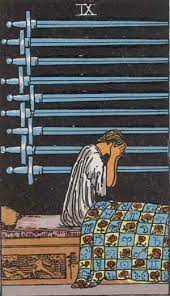
Like many writers, Yolanda feels that if she’s stuck with her current project—short story, essay, master’s thesis—she’s “blocked.” But if she looked more closely, she might find she’s facing a more manageable problem.

In my wide experience as a writing coach, I’ve seen writers like Yolanda free themselves from the dreaded block quite quickly. They just need the right strategies.

If writer’s block is threatening, check out these common causes and their cures. You, too, may be able to unlock writer’s block and write with ease again!

Start here: Is it really a block?

At a crossroads? Maybe you’re actually just confused about what to do next. “Confusion” is not a block! It’s a reasonable response to the many paths a writer can take at any given moment. Uncertain of which way to go?

Try this: Pick any one possibility, set a timer for ten minutes, and write as if you were committed to that direction. If it’s not right, back up and try a different option.

Empty tank? Exhausted? Pushing forward when our creative tanks are empty is a sure way to grind writing to a halt. While fatigue is not necessarily a symptom of writer’s block, it sure can feel like it.

So, take note: Too tired to write? Give it a rest. Whether you need an hour or a week to recover your mojo, take it. Your restored future self will thank you.

Says who? Okay. Here’s the truth: I hate being told what to do. Maybe I’m alone in this. Maybe not. But I have noticed that when someone is writing a memoir because other people have told them to—“You’ve had such an interesting life”—the would-be writer generally loses interest at some point. Likewise with fascinating topics about which a person is an expert. Or when someone is naturally funny or a great story teller.

If you’re struggling to fulfill someone else’s literary ambitions for you, chances are good you don’t have writer’s block. You probably just don’t want to write a book. Or, at least, not the book other folks are telling you to.

Mix it up to unlock the block!

Pushing an agenda? When we come to writing with a too-tightly circumscribed agenda, we can write ourselves into a corner. Rather than trying to beat our project into obedience, we can play a bit. Free-writing on our topic can allow fresh ideas to surface, unlocking our writing progress once again.

Traveling the straight and narrow? New writers—particularly new novelists—may think their job is to start writing at the beginning and continue all the way to the end. Makes sense, right? But more often than not, this approach leaves them in a rut, wheels spinning.

Instead, imagine which scene might be the most interesting to write today. A novel is a long haul. Making it more fun makes it more likely you’ll actually get it done.

Play hopscotch! Rather than committing your focus to a single writing project, have two or three on the go. When you feel stuck with one, move to a different piece. Hopping from a stalled project to a fresher one is sure to reinvigorate your writing process.

I hope you (and Yolanda!) try unlocking your next bout of writer’s block with some of these strategies. While a little angst can make for interesting writing, I’ve found it’s best to keep most of the drama (not to mention the swords!) on the page, not hanging over our heads and  inducing nightmares.

Would you like some more writer’s (un)blocking strategies from a top writing coach?

As a professional writing coach, I’ve boosted writers at all levels of experience out of their  writing block slump. Maybe I can help you!unlock-writer's-block-with-Jamie-Morris-writing-coach Schedule your free consultation.and check out Should I Hire a Writing Coach” in THE WRITER magazine.

Thanks to U.S. Games Systems, Inc. for kind permission to use the image of the Nine of Swords from the RIDER-WAITE (SMITH) TAROT.

Two of Coins, Your Book Coach

When Ella called, upset that daily life was eating up her writing time, I knew just where to look for advice. Woman juggling two coins as book coach for balance“If tarot’s Two of Coins were your book coach,” I said, “she’d show you just how to keep all your priorities in play.”

The Two of Coins (aka the Two of Pentacles) has made multitasking a fine art! She juggles resources, makes time for multiple projects, and just generally finds balance amid her myriad obligations. Bottom line? There are only so many hours in the day, and it’s up to her to make the most of each.

So much to do!

As a book writer, Ella, like so many of us, struggles to make her time s-t-r-e-t-c-h. She’d like to work on her novel, sure. But she’d also like to help her daughter with her science homework, take the dog for a run, cook something nutritious for dinner, clean the bathroom—and finish the dratted report her boss tossed on her desk at the last minute!

Can she—or you, or me!—get it all done? Maybe? On a good day, perhaps. But the truth is that for many of us, a busy day shoves our writing to the curb.

Book coaching for busy folks

Out of necessity—life!!—the Two of Coins has developed five writing coaching strategies for herself. She uses them to keep her life in balance and get her novel done! These strategies can help you keep your book project alive and spinning with all the other plates you’ve got in the air.

That’s why, if you find yourself in a similar pinch as Ella, I recommend hiring the Two of Coins as your book coach!

Strategies for book writers

1) First things first: When the Two of Coins gets up each morning, the first thing she does  is grab her tablet and jam out 250 words on her novel. These are not (necessarily) good words. She might try out a bit of dialogue or describe a scene. But good or not, these words set her brain to thinking about her novel for the rest of the day!

2) Catch as catch can: My admirable client Jessica works on her novel in the pick-up line at her kids’ school. A couple of times a week, she grabs a half hour when all four kids are doing homework to add another scene or two. Be like Jessica. She makes steady progress in the spaces in-between.

3) Make a date: Find a critique partner whose life is as busy as yours. Meet monthly to exchange pages—and complain about how little time you have to write! This strategy, based on accountability and camaraderie, will give you both someone who cares that you are writing and who sympathizes with how hard you worked to get that writing done.

4) Buy or barter time: If you have kids—or an aged parent, or dogs, or a yard that needs mowing—could you hire a neighbor to help? Or exchange your skills for their time? If some neighborly support buys you even an hour or two a week for writing, you are the big winner.

5) Keep a book diary: End your day by jotting down notes about your book. Maybe you had a thought about plot or structure during your busy day. Or maybe your morning writing gave you a jumping-off place for tomorrow. Spend ten minutes before lights out noting your progress—and where you want to go next.

The Two of Coins, your book coach, gives you a high five—and says, “Keep going!”

Once you get the hang of prioritizing your book, you’ll discover your own strategies to help you get ‘er done. Keeping in mind that the best lives are full to the brim with family, friends, and good creative work, we can always rely on the Two of Coins’ book coaching to show us how to get it all done.

Would you like some insight from a top book coach?

As a professional book coach, I’ve helped many writers create a workable life/writing balance. Maybe I can help you!Jamie Morris Writing Coach Schedule your free consultation.and take a peek  at the article Should I Hire a Writing Coach” in THE WRITER magazine.

The beautiful image of the Two of Pentacles comes from THE MODERN WITCH TAROT DECK, published by Sterling Ethos.

King of Cups, Your Writing Coach

If Tarot’s King of Cups were your writing coach, he’d teach you to calm the troubled waters of your writing life. He rules a kingdom that is entirely fluid and in motion—and he’s had to learn how to maneuver in its emotional depths. It took him some time, but the King of Cups has matured into a person who can acknowledge his feelings without being overbalanced by them. And this is his gift to you.

King of Cups, your writing coachYou see, it’s his kingdom—of water and creativity and the unconscious—from which our dreams and our writing emerge. But when we enter his world, we must be prepared. Our writing can take us far from known shores. It can bring us into waters so deep we get the bends. But, whether we are writing memoir or fiction, those depths are where we are most likely to find pearls of great worth.

Writing coaching advice from the King of Cups: “B” is for “ballast”

So how do we make the best use of the King of Cups’ advice? Take on ballast! “Ballast” is defined as something that gives stability—certainly helpful when we’re about to tug on our scuba gear and slip backwards into the wild waters of our creativity.

One way to stabilize ourselves is to take on a daily writing practice. Our writing practice might look like Julia Cameron’s Morning Pages or Natalie Goldberg’s writing practice. We might use a journaling app or keep a quiet blog. However we choose to do it, writing daily can keep our ship steady as we navigate difficult shipping lanes.

The King of Cups might also suggest we have regular conversations on dry land. We can meet with other writers, sharing advice as well as telling harrowing tales of the tsunamis we’ve survived! We might also seek out a counselor or a 12-step or other supportive group. Sharing our experiences with others can help us find balance while we’re deeply engaged creating an imagined or remembered life on the page.

From his sea-tossed throne, our writing coach the King of Cups reminds us that the more we commit to our literary work, the more likely we are to be pitched about by internal squalls. He’d like us to prepare for those squalls—by having plenty of ballast at hand.

Would you like to discuss your writing process with a top writing coach?

I’ve worked with many deep-diving writers. I’d love to hear about your work and see if I can help. Jamie Morris Writing CoachI invite you to schedule a free consultation. You might also read Should I Hire a Writing Coach” in THE WRITER magazine.

Thanks to U.S. Games Systems, Inc. for kind permission to use the image of the King of Cups from the DREAMING WAY TAROT.

Tarot Writing Coach: Four of Coins

Tarot writing coach? What?! Why?! Although I’m a professional writing coach, I still need the occasional new insight—for myself and my clients. I’ve found tarot’s 78 intriguing images can definitely inspire us! When writers need an out-of-the-box solution, tarot can act as a writing coach and help them find fresh ideas.

Tarot writing coach to the rescue!

For instance, when my memoir writing client Jeanine wondered why she wasn’t getting more traffic on her blog—which houses lovely vignettes from her life—we consulted the cards to see if they might offer an angle we hadn’t considered.

Although Jeanine was in the early stages of her book-writing process, she knew she intended to publish her memoir. So, building a base of engaged readers was important for her. That was why she’d started her blog. But it wasn’t garnering the interest she’d hoped it would.

Looking for further ideas, we drew the Four of Coins from the Anna.K Tarot. A person sneaks a gold coin to show tarot as a writing coachThis card reframed Jeanine’s issue perfectly! Using the image as a metaphor for Jeanine’s situation, we saw that she has the literary goods (the coins), but doesn’t want to share them!

Although she is posting on her blog, she’s reluctant to publish her work on any other social media platforms. Like the figure in this card, it’s almost as if Jeanine is trying to hide the gold of her writing from others’ eyes.

A writing coach’s solution

Once we saw Jeanine’s dearth of blog visitors from tarot’s point of view, we realized the issue could be resolved by her sharing her beautiful work more widely. For advice on how Jeanine might do so, I turned to author and artist Austin Kleon. In his book SHOW YOUR WORK! 10 Ways to Share Your Creativity and Get Discovered, Kleon shares a bevy of options—beyond the blog—for an aspiring memoir writer to choose from.

(If you, like Jeanine, are ready to try some low-risk strategies for sharing your writing, I’ve written an article that discusses Kleon’s ideas and includes several of my own. Take a glance at Publish Your Writing Now: Whisper, Shout, Hit Send!”)

What else could the Four of Coins have to say?

If the Four of Coins were your writing coach, it might suggest you share your resources with other writers. For example, you could host a monthly critique group for writers who need support. Maybe you could review a friend’s manuscript and give her feedback. Or what if you read parts of your work-in-progress at a nursing home or senior center?

This card’s bottom line? Share the gold of your writing and your experience. It will benefit both you and those in your writing world.

Would you like to discuss ways to get your writing out into the world with a top writing coach?

I’d love the chance to hear about your story and offer you some support from my many years of experience helping writers become authors. If you’d like to chat with me, Jamie Morris Writing Coachschedule a free consultation. Also, check out this article: Should I Hire a Writing Coach” in THE WRITER magazine.


Thanks to Llewellyn Worldwide for kind permission to share this image from the Anna.K Tarot.

Tarot and Writing: Meet the Two of Cups, Your Writing Coach

Tarot and writing seem a match made by the very best of old-school matchmakers! The 78 images that make up a tarot deck can inspire writers in many ways. As a writer myself, as well as in my role as a writing coach, I’ve found looking at the cards can spark our creative writing, suggest a solution to a specific literary problem, or even propose a way out of a writing slump.

No matter what issue we’re addressing, it can be fun to draw a tarot card and see what it has to offer about our current writing journey. In this case, I drew the Two of Cups. Here’s what this smart card had to say.

Tarot and writing: the Two of Cups on your writing process

If the Two of Cups were your writing coach, two of cups and your writing processshe’d ask you to be loving with yourself and committed to your writing project. In this card, we see a union occurring, two people are joining their intentions for a higher purpose. Often read as the card of new love (or even infatuation), we can also understand this as a contract being pledged.

What if that contract is between you and your writing? What promises are you giving? And what do you expect in return? I’ve read that a relationship isn’t really a 50-50 proposition, but a 100-100 one. If our relationship is with our writing, then it follows that we need show up fully (hello, butt in chair!), even when our writing is slow to respond.

Also, as in all partnerships, patience is a thing. Consider Corinthians 13:4-8: “Love is patient, love is kind. It does not envy, it does not boast, it is not proud. It does not dishonor others, it is not self-seeking, it is not easily angered, it keeps no record of wrongs.”

If the Two of Cups were your writing coach, she might ask how you can apply these principles to yourself and the writing you love.

Want to talk about your writing with a top book writing coach?

I’d love to learn about your relationship to your writing project. As a professional writing coach, Jamie Morris Writing CoachI might have some helpful insights to share. Please click to schedule your free consultation. You might also take a look at the article Should I Hire a Writing Coach” in THE WRITER magazine.

Thanks to U.S. Games Systems, Inc. for kind permission to use the image of the Two of Cups from the RIDER-WAITE (SMITH) TAROT.

Posted in News, Notes & Quotes | Comments Off on Tarot and Writing: Meet the Two of Cups, Your Writing Coach

Teacher’s Pet: A Tarot Writing Prompt

In this week’s blog post I will provide you with a Tarot writing prompt.

IN TAROT CIRCLES, the Hierophant, also known as the Pope, can get a bad rap—for being an uber-conservative, repressive, by-the-book sort of guy. But, really, he might just represent any clergy person, mentor, or teacher—however rule-bound or not. And I’ve had some great teachers!

My first-grade teacher, Mrs. Nethercote, for instance, gave me props for my mad reading skills. The next year, my second-grade teacher, Mrs. Smith (who looked like Aunt Bea from THE ANDY GRIFFITH SHOW), thought I was a fine communicator and took the time to introduce me as such to my third-grade teacher, who subsequently always listened to what I had to say!

High school was tough, but my tenth-grade English teacher, whose name is lost to memory (and to various adolescent indulgences), was a bright light, encouraging my poetry-writing. In Seattle, at Shoreline Community College, theater instructor Charlie gave me a directorial role, saying she thought I had leadership potential.

As I make this list, other teachers—a horseback-riding instructor, an art teacher, a math professor—arrive at the threshold of my mind, nodding approval across the years. Their long-remembered encouragement has boosted my self-esteem and bolstered my belief in my own abilities when I’ve needed it most.

This, then, is a thank you to them all.

WRITING PROMPT

Revisit your memory of a supportive teacher—or create such a champion in the life of a character who could benefit from one just about now.

Alternatively, if your life has been stingy regarding mentors, consider this writing prompt as your chance to rewrite history and provide yourself one you wish you’d had. Once you’ve got him or her on the page, let your self-created mentor provide a bit of guidance. Chances are it will be some of the best advice you’ve ever received!

When I told my art pal Paula Jeffery about this prompt, she shared this poem with me:

Just Words
       by Paula Jeffery*

Before home time, every day,
That sleepy, can’t-write-any-more
Time of day,
Low sun picks out chalk dust
Suspended in air, over kids,
Who only want to meander
Across the park,
For tea and Thunderbirds.

Most kids. Not all kids. Not us kids.
We were Mr. Gardener’s kids,
And the slowest of us perked,
Eyes bright, legs crossed
At the end of the day,
Warm with anticipation.
Home was not pressing
On our nine-year-old minds

 Unexpected Mr. Gardener,
Generous, mild, and
Gentle sharer of knowledge,
Balancing on the brink
Of retirement,
Who, at the Christmas concert,
Awed us, floored us
With soaring solo Emmanuels.

Before the bell, we gathered round.
He held the book aloft and cracked open our little worlds
With Beowulf.
No diluted, convoluted picture story form,
This was all bloody battles,
Dragons, a severed arm.
A teacher transformed
Animated, passionate, Mr. Gardener
Held us all in thrall

 We went home through the cloakroom,
Summer air heavy with the smell
Of plimsolls and sour milk,
Minds alive and buzzing with heroes and monsters,
Chasing sword play across the park.

I thought, Imagine. You can have all that
With just words.

MORE WRITING INSPIRATION

TEACHER, by Sylvia Ashton-Warner

THE FREEDOM WRITERS, by The Freedom Writers and Erin Gruwell

EDUCATING RITA, 1983 dramatic comedy, starring Michael Caine

Writing coach

Need help with your book? I’m available for book coaching! And check out Should I Hire a Writing Coach” in THE WRITER magazine.

***

*Artist, writer, self-publisher Paula Jeffery lives in the middle of England. Visit her at http://www.paulajeffery.com.

Thank you to U.S. Games Systems, Inc. for kind permission to use the image of The Hierophant from the RIDER-WAITE (SMITH) TAROT.

Writing Prompt: Thankful

Today’s writing prompt: Thankful

IT’S BEEN A TOUGH YEAR. You’ve probably heard that at least a thousand times. But it’s true. And that toughness can lend a dark and uneasy tone to our lives. That’s why today, our writing prompt is “thankful.”

Writing prompt: thankfulOf course, here comes Thanksgiving to remind us of our blessings. And why not? Even if there’s no turkey (bird or vegan) for our tables, even if our families (of origin or choice) are unable to join us to raise a glass, even if we have sustained devastating loss over the last few hundred days, still, we can—if we wish—look around and find something to be thankful for.

And doing so seems to be good for us! According to an article in FORBES, focusing on gratitude improves not only our psychological well-being, but our physical health. Feeling thankful may also help us sleep better and think better. And, certainly, it inclines us more positively toward ourselves and our fellow humans.

Writing prompts for gratitude

We writers often make sense of things by writing. So here are a handful of writing prompts to support you if you feel the need to shift your gaze from what’s not working to what is.

1) Start a gratitude journal. Making a daily list of three to five things we’re grateful for is a simple but effective way to keep gratitude alive in our hearts.

2) Write about a time when something wonderful happened (expected or not). Remembering any boon—from the timely discovery of a much-needed twenty-dollar bill to learning that a loved one’s health concern ended up being nothing for concern at all—reminds us that, like rays of sunshine, moments of well-being can break through the cloudiest of times.

3) Create a dour character who, like Eeyore, sees life as an endless series of difficulties. Put that character in unavoidable proximity to a person you might call a “Pollyanna,” someone who is unremittingly cheerful. Perhaps they become roommates or cubicle mates. Or maybe Pollyanna marries into Eeyore’s close-knit family. Could it be that they’re stuck in an elevator together? Or on a three-hour tour“!

However you glue them together, let Pollyanna’s sunny outlook eventually push your Eeyore to a change of attitude. (This may take considerable doing. All the better for dramatic tension!)

4) Write about a random act of kindness and its unexpected, far-reaching effect. This can be something you did for someone else, or a kindness you received. You might also use this idea to launch a short story!

5) List your own good qualities, attributes of yours for which you’re grateful. Dig deep! Don’t be modest. In addition, you could list the ten best qualities of some of those closest to you. Bonus: Make any of these lists into a poem!

These prompts are just jump-starts, a handful of ways you might incorporate gratitude and thankfulness into your writing. They aren’t (necessarily) meant to elicit high literary art. They are meant to remind you of what’s going right in your world and send you into your day (or into your dreams) with a lighter heart.

And that’s something to be thankful for.

Writing resources

Here are some books I turn to when I need to boost my gratitude practice. In them, you’ll find folks whose compassion and generosity and appreciation of the everyday world make their own and others’ lives better.

HUMANS, Brandon Stanton

PUT YOUR HEART ON PAPER, Henriette Anne Klauser

29 GIFTSCami Walker

POEMCRAZY, Susan G. Wooldridge

GOOD DAYS START WITH GRATITUDE (a journal), Pretty Simple Press

Writing coach

Need help with your book? I’m available for book coaching! And check out Should I Hire a Writing Coach” in THE WRITER magazine.

* * *

Thank you to Llewellyn Worldwide for kind permission to use the image of the Three of Cups card from the ANNA.K TAROT.  

RIP Beverly Cleary: I Think Ramona Grew Up To Be a Writer

Yes I think Ramona Grew Up to Be a Writer

By Tia Levings

When Beverly Cleary died in March, at 104, the little girl who still lives inside me cried her heart out. 

Cleary’s books, along with Judy Blume’s TALES OF A FOURTH GRADE NOTHING and SUPER FUDGE, were the first chapter books I read as a kid. I remember relating to the Quimby family’s always-tight finances, and the frequency with which Ramona heard her parents struggling with depression, big bills, and unavailable jobs. I’ve never forgotten the agony of squeaky shoes on the first day of school or the horror of throwing up in class. And remember when Ramona broke a raw egg on her head? Ugh. Ramona and her foibles taught a generation of kids that one could endure all that, feel all the feels, and carry on. 

Did Ramona grow up to be a writer?

The Ramona books came out in the 70s when the economy was hurting, and gas lines were long. Our parents sighed after reading the news a lot, and they tried hard to find their way. Those days smell like peanut butter sandwiches in metal lunch boxes, leather shoes wet with rain, and school glue. Ramona and I both wore hand-me-downs, chose favorite teachers, and felt big feelings. We were little girls without front teeth, and we, too, were trying hard to find our way. 

Ramona’s parents weren’t perfect like the parents in other books. They were often irritable or struggling with their burdens, and getting hamburgers in a sit-down restaurant as a family was a BIG TREAT. There were even lovely strangers in the world who paid for their meal. The way Cleary wrote the Quimbys helped me (and a generation of kids) feel seen and life would be okay. 

“I think children like to find themselves in books.” ––Beverly Cleary

A librarian told third-grader-Beverly to write stories. She wrote about her third-grade experiences, writing childhood from the inside out. Eight years old is such a pivotal time for a kid. Eventually, Beverly wrote about Ramona, who was eight, who was read by readers like me, also eight. The result is a bit like Russian nesting dolls, except with a writer, inside a writer, inside a writer. So, maybe generations of kids who nested inside Ramona like me became writers because of that librarian. 

I have a hunch Ramona Quimby grew into a woman who still found wonder around every corner, felt all of her feelings, and laughed at her foibles––eventually. Looking at photos of the elderly Beverly, with the glint of Ramona forever in her eye, I’m sure that’s exactly how life turned out. And now, at 104, Beverly has died. But Ramona lives on, in books and in writers like me. 

Writing coach

Tia Levings hired me as her writing coach in 2017. Since then, she completed her memoir, co-authored a book on the craft of writing, and started a podcast for writers. I’m delighted to have Tia as a colleague, co-writer, and client. And I’m so glad that she’s sharing some of her writing experience with us, here. Thanks, Tia! 

Need help with your book? I’m available for book coaching! And check out Should I Hire a Writing Coach” in THE WRITER magazine.

Tip for Writing: The Flip Side of Writing

As a writing coach, I often share this tip with aspiring authors:

READING is the flip side of writing. Every author, teacher, or writing coach worth their salt will suggest you read widely in your genre if you want to publish—Stephen King* not least among them! We’ll repeat this tip for writers (often) because we know you’ll learn as much about structure and style from considering how your favorite authors artfully construct their stories as you will from even the most instructive books about the writing craft.

Tip for writingFurther, reading—in one’s genre or out of it—reliably restocks our pond of creativity, so that, when we go angling for new ideas and approaches, there are always plenty of fish to choose from.

Also, as poet W. H. Auden is reported to have said, “We read to learn more of what it means to be human.” And it does seem that often we are—consciously or unconsciously—seeking wisdom of some sort when we pick up a book.

This is a fabulous tip for writing and there are a gazillion or so lists of books to consider adding to your reading pile. Among them, THE NEW YORK TIMES Book Review, BookBub, and Goodreads.

A little closer to home (like, here, on this blog!) are a couple of reading lists you might want to peruse. The first, 20 (or so) Novels That Have Impacted Our Lives and Imaginations, was compiled during a very literary walk with my best pal Jill. The second, a post titled Support Black Writers, has a list of lists—Black-authored books that PBS, Penguin Random House, and HuffPost consider must-reads.

*And, as you may know, Stephen King, who reads voraciously, widely, and well, includes a list of 96 books he considers important in his ON WRITING: A MEMOIR OF THE CRAFT. You’ll find that list on Aerogramme Writers’ Studio.

Wherever you are in your reading life, keep turning those pages and don’t forget this writing tip. Reading not only fills the creative well—it fills our hearts, our souls, our minds, and our imaginations.

Writing coach

Need help with your book? I’m available for book coaching and manuscript review! And check out Should I Hire a Writing Coach” in THE WRITER magazine.

* * *

Thank you to Llewellyn Worldwide for kind permission to use the image of the Nine of Pentacles card from the EVERYDAY WITCH TAROT

Story Ideas for Writers

Used to be, I’d have to hunt for great story ideas.

Sometimes, I’d dig out an idea for a story from the newspaper or a conversation I heard at Starbucks. Recently, though, I haven’t even had to get out of bed to gather inspirational goodness. That’s because a couple of bloggers have been delivering fresh literary fodder to my inbox on the regular.

Here are two such story ideas. Either could blast a humdrum story out of its complacency!

1) Inventing narratives

Hip biz guru Seth Godin wrote recently about inventing narratives. He said, That story in your head? It’s invented. It has to be. It might be based on some things that actually happened…. But it can’t possibly be a complete and detailed understanding of everything.

Seth sees this creative interpretation as problematic. That’s because Seth is not a novelist! Novelists are probably especially prone to inventing narratives—and probably particularly good at it! They might tell stories about everyday occurrences, family history, or the big issues life flings at us. What type of story ideas do you have?

For instance, a novelist could make up a story to explain the behavior of someone who snatched a parking spot from her, the reasons her parents favor her sister, or why one person got a terrifying diagnosis but she did not.

Which is actually pretty awesome! (Maybe not in real life—but in our literary lives, for sure.) That’s because it’s a short trip from misinterpreting a situation to taking misguided action on it—which, in fiction, can lead to exactly the sort of trouble needed to drive our story full speed ahead!

Got a dead spot in your plot? A place where not enough is happening? Play with this idea:

  • Your main character misunderstands another person’s motivations—believing them to be acting out of malice, when that is far from the truth!
  • Even worse, your MC takes vindictive action in response to the story she’s concocted.
  • What bad stuff comes tumbling down the hill to complicate her life as a result?
  • How the heck is she going to dig herself out of this mess?

2) Alter egos

Clever tarot writer Kate at DailyTarotGirl.com has been promoting the subversive advice of her “evil twin,” Veronica, for years. As I pondered a fresh approach to story ideas for writers complicating a story I was working on, I thought about Veronica and realized the damage an alter ego could do to a plot!

Just imagine it! What if your main character had an alter ego? A persona she allowed to say, eat, or do whatever her daily persona was constrained against? That alternative personality might be braver, stronger, or kinder than she is in her regular guise. Or that other personality might be sneaky and underhanded. Or, if you’re writing a thriller, she might even be murderous!

And that’s just a start! What kinds of literary trouble might such a character generate? The story ideas seem endless—and fascinatingly, conflict-inducing-ly, complicatedly fraught!

So, that’s it for this week. Now, go forth and blow up your plot with these or any other trouble-inducing ideas. Just light the fuse and stick your fingers in your ears. After it gets over the shock, your story will thank you for it!

Writing coach

Need help with your book or thinking about hiring a writing coach? I’m available for book coaching and manuscript review! And check out Should I Hire a Writing Coach” in THE WRITER magazine.

* * *

Thank you to Llewellyn Worldwide for kind permission to use the image of the Moon card from the EVERYDAY WITCH TAROT

1 2 3 4 5

Copyright ©2026 Jamie Morris LLC| Contact | Privacy Policies | Terms & Conditions