Posts Tagged ‘resources’

Snapshot Memoir: Short Form, Big Impact

Writing a snapshot memoir

 On the longest night of the year, my mom and I strolled softly lit paths through the wooded grounds of the Central Florida Zoo during the Asian Lantern Festival—and I’m so glad I preserved this precious experience as a “snapshot memoir.” As we wandered, we encountered illuminated lanterns shaped like crescent moons and meerkats and life-sized hippotamuses—and, yes, tigers. Oh, my!

snapshot memoirNow snapshot memoirthat she’s 85, I treasure sharing quiet adventures like this with my mom. So I took pictures—lots of them. Of the tigers and cheetahs and dragon lanterns, yes. But also of my mom. Because these are moments I’ll want to remember, and the pictures will help me do so. But I know I can drop even deeper into those moments by writing about the photos that capture them.

In a blog post titled “Why Do We Write? A New Year’s Exploration,” I quick-list a dozen reasons I write and help others write (and in the post, I invite you to explore your reasons for writing, too!). While I somehow forgot to include “preserving memories” on that list, doing so is one of the wonderful gifts writing gives to us.

snapshot memoirI’m not alone in thinking this. Natalie Goldberg says writers live twice: first in their immediate experiences and second in writing about them. Of course, if we have photos of our experiences, we have the opportunity to home in on details we might have forgotten otherwise. And vice versa: When we write from photographs of our lives, we tend to discover what’s hidden beneath a photo’s surface.

Snapshot memoirs

A sub-genre dedicated to writing from our pictured memories, in the snapshot memoir (also known as flash memoir), we may be writing from actual images—on our phones or in our photo albums—or from indelible snapshots in our mind’s eye. Either way, though flash memoir is different from flash fiction—because we focus on our own lives rather than on the created lives of imagined others—many of the rules of flash fiction apply to this super-short snapshot memoir form, too.

Readers Write: THE SUN MAGAZINE

THE SUN MAGAZINE has a wonderful feature called Readers Write, in which SUN readers are invited to write and submit their own snapshot memoirs. On THE SUN’s site, you’ll find examples of published Readers Write pieces as well as the prompts and guidelines governing their submission process.

Snapshot memoir writing prompt

Setting aside just ten minutes with pen in hand and a photo in front of you, travel back to the moment the snapshot has captured in its frame. Allow yourself to enter the picture. Look around carefully. Now, peek outside the frame to your memory of the wider context. What’s going on to the left of the image? To the right? Who’s taking the photo? Why?

You might take a deep breath and dive into the emotions the image evokes—both the sweet feelings and the bittersweet. Or maybe the photo calls to mind associated memories that add to the meaning and magic of that particular instant in time.

However deep you’re ready to delve, imagine the photo snapshot memoiras a treasure map. It’s full of possibilities for sure! But to access the gold it promises, we need to follow the path the map reveals. When we write about the image before us, sentence by sentence, we step steadily toward riches the photo can only hint at. Because the real treasure lives inside us. And our pen creates the road that will take us there.


Would you like a writing coach on your side?

Are you interested in writing stories about your life? And would you like some support as you do so? I’d love to talk with you about becoming your memoir writing coach! You can schedule a free consultation and be sure to check out Should I Hire a Writing Coach” in THE WRITER magazine.

Give YOURSELF These 12 Gifts for the New Year, Writer!

DAYS SPEED BY, BUT WRITING GOES SLOW. It’s in its nature. We pre-write, draft, redraft, review, revise, edit, and proofread—just to get 500 decent words where we want them. Instead of railing against the constraints time puts on our writing process, we can choose to drop below time’s dictates and give ourselves an opportunity to move at the pace of writing, rather than demanding our writing perform at the hectic pace of life.

To that end, here are twelve gifts to give to your writerly self this coming year. You might want to unwrap one a month between now and next December. May each of these exercises nourish your writing needs and give your creative self a chance to breathe.

1. Visit a used bookstore. Browse dusty shelves for treasure. Settle on the floor in the picture book aisle and allow your inner kid to journey through the illustrated worlds you find there.

2. Journal. Curl up on the couch one Sunday morning and write with no agenda, no goal. Take this time to discover what you think, what you feel, what you mourn, what you hope for … all by writing it down.

3. Discover a new-to-you author. Ask writing pals to recommend writers they think you’d enjoy. Check out the new releases section of your local library. Or read THE NEW YORK TIMES Book Review, join a book group, or sign up for Goodreads. Let other writers share their gift with you this year.

4. Start a manageable new writing project. Perhaps you’ve always wanted to create a kids’ book about a favorite toy. Or compile your grandmother’s recipes, updated to make the most of today’s kitchen gadgetry. Or collect photographs of your cats, caption the images, and produce a few copies just for you and your cat-crazy friends (or is that just me?). A new project can add fuel to your writing life. Just make sure it’s the right size to bring to completion this year. Because writing “The End” on a draft is a sweet reward for a (small) job well done.

5. Make a date with a writing pal. A cup of coffee, a croissant, and congenial company create the perfect ambiance for a few quick, free-writing sessions. (I’ve got about a zillion writing prompts on my blog that you’re welcome to use for this purpose! Just search “prompts.”)

6. Take a walk. While you’re strolling, keep an eye out for interesting sights and occurrences. Maybe snap a few pictures along the way. When you get home, take just ten minutes to write about what you saw.

7. Record your dreams. Keep a notebook by your bed and jot details from your dreams a few mornings in a row. This lets your unconscious know you’re listening, making it more likely that it will offer up the fresh goods next time you need access to its wild, imaginative leaps.

8. Nap. Or, if you’re not a napper, steal an hour out of an otherwise busy day for horizontal couch time. Flick through a magazine (check out THE SUN MAGAZINE!), or read a short story or personal essay. Snuggling with an available cat, optional.

9. Take a writing retreat. Depending upon your resources, this might be a month-long writing residency on Martha’s Vineyard, four days at the Rocky Mountain Fiction Writers retreat, or a weekend holed up in your own cozy den with no interruptions and no other plans but to read and write.

10. Follow your nose. You know how sometimes you’re online looking for one thing and something else catches your eye? And reading about that next thing, you see something even more intriguing? Great! Indulge that! Follow your nose from interest to interest, filling the thirsty well of your mind with tidbits that may come in handy in some future writing project—or may not. Even if you never use any of that cool stuff, I bet your writing self considers the time well spent. (Brain Pickings is a great place to start your nose-following quest!)

11. Earmark November. Each November, writers around the world take on the NaNoWriMo challenge. Short for “National Novel Writing Month,” NaNoWriMo provides support to get bigger projects done. While the NaNo official goal is 50,000 words on the first draft of a new novel, you might piggyback on NaNoWriMo’s energetic community to complete a more modest project—a short story, for instance, or one of those manageable projects you started back at number 4!

12. Throw your writer self a party. Pull out all the writing you’ve created this year and celebrate the sheer number of words you got on the page. Raise a glass, bake a cake, fling confetti. You’ve done good. Congratulations!

* * *

Marina Shemesh has released this “Balanced Stones On White Background” image under Public Domain license CC0 Public Domain. I appreciate the opportunity to use it here.

Posted in News, Notes & Quotes | Comments Off on Give YOURSELF These 12 Gifts for the New Year, Writer!

Why Do We Write? A New Year’s Exploration!

ON THE LAST NIGHT OF EVERY WORKSHOP, I used to end with an exercise by Natalie Goldberg.* It’s pretty simple. List a dozen reasons that you write. They can be Work with mecommon-sensical: I write to communicate, or farther-fetched: I write because the fairies want to speak to me, and when I scribble fast enough, they take over my pen and let me know what they have to say.

Fortunately, there are an infinite number of points along the continuum between common sense and, um, fairies! For instance, here’s my (current) list:

  • I write because my father wished he were a writer, so I do it for him.
  • I write because it gives me something to do with my hands, and I’m no good at needle crafts.
  • I write because when I settle down on the couch with a pen and notebook, all three cats come and sit near me.
  • I write because sometimes a pleasing turn of phrase or odd story emerges unexpectedly from my pen.
  • I write because all of my friends are writers.
  • I write because I love the visual pattern my handwriting makes across the page.
  • I write because I have about seventeen gazillion books on writing—and they’re all inspiring!
  • I write because it’s fun to do in a café (and might even make me look interesting).
  • I write because I have a blog and a book to finish.
  • I write because I have things to say about writing and about tarot.
  • I write because it’s expected of me.
  • I write because nothing feels quite as good as having written!

Writing prompt

It’s the end of the year, a good time to take stock. Make yourself a cup of nog or indulge in a sweet, flavored coffee (’tis the season, after all) and dig in to this question: Why do I write? As with any free-writing exercise, move your hand (or fingers) as fast as you can. Don’t stop to think. Get as far beneath the common-sensical as you’re able. Who knows? If you dive deep enough, you might find a few fairies to chat with!

TABLE FOR TWO?
As years of workshops attest, this is a wonderful prompt to do with others. So instead of going it alone, grab a café table and a friend, set a timer, and see who can get the most items scrawled on their list in ten minutes. (Although I asked workshoppers to find twelve reasons they write, going further, to fifty or even a hundred reasons, can really loosen up your brain and get it to bring wilder, more exciting ideas to the fore!)

WRITING RESOLUTION
Once you’ve got your “why’s” for writing, you might use one or more items on your list to guide you as you form your New Year’s writing resolution. Knowing why we write can create a foundation that supports our writing throughout the year—long after we’ve torn off January’s calendar page.

***

*You’ll find Goldberg’s Why I Write exercise and its accompanying essay in her first book on writing, WRITING DOWN THE BONES.

A Long Way Down (Tarot Writing Prompt)

THE CHARIOTEER, WITH HIS FOOTBALL-PLAYER SHOULDERS, is determined. He has all his ducks (and sphinxes) in a row. He’s laurel-wreathed and star-crowned. He’s got promise, dude! Get such a character in your sights—maybe modeling them on someone you know (or someone you used to be?)—and write about an early success they’ve had.

For instance,

  • She led her high school debate team to their winning-est season ever, then earned a full scholarship to UCLA, graduating summa cum laude in political science.
  • Or, he was an Olympic equestrian hopeful, riding six-figure horses at the age of fifteen.

Next, fast forward ten years and look them up—only to find they’ve fallen deep into a well of circumstances that really surprise you, given their early promise.

For instance,

  • She stays home with five young kids, now, and is supporting her husband’s bid for county commissioner.
  • Or he, horses a thing of the past, has become a beast of burden himself, humping forty-pound bags of feed and bales of hay at the local feed store.

What happened? Did she trip over her own hubris, too confidently taking on a project she couldn’t complete? Or did his attempt to besmirch a competitor’s reputation and steal their ride backfire? Are they in a slump from which they can’t seem to emerge? (Cue movie montage of a collapsed main character, unable to get out of bed, litter box stinking, produce that used to be whirled into fabulous energy smoothies moldering in their refrigerator’s produce drawer.)

Tarot writing prompt

However they got here, your character is drowning at the bottom of life’s pickle barrel. How can you help them? What kind of stakes can you create that will light a fire under your once-optimistic little charioteer and get them to rejoin the race?

  • Do you bring her face to face with an instance of social injustice that directly threatens her family—hoping she’ll get busy writing letters to the editor, canvassing her neighborhood, and speaking passionately at meetings of her local government?
  • Or, do you place a once magnificent, now-neglected horse in a field he passes on his way to work—hoping he’ll rescue it and bring both it and himself back to the glory of their earlier days?

Whatever their predicament, look into your character’s past and find the makings of a virtual cattle-prod of a motivation to jolt them back into the saddle again!

Writing inspiration

WORKING GIRL,1988 comedy, starring Melanie Griffith and Harrison Ford
GREAT EXPECTATIONS, by Charles Dickens
“New York, New York,” composed by John Kander, lyrics by Fred Ebb

* * *

Thanks to U.S. Games Systems, Inc., for kind permission to use the image of The Chariot from the RIDER-WAITE TAROT.


Walk Like a Writer

ARGH!! I’M STUCK! I’ve written myself into a corner and can’t find my way out. While I stare at the screen, hoping the right words will magically appear, I feel an inner nudge. It’s my smarter self trying to get my attention. She’s thinks I should power down my computer, put on my sneakers, and take a walk. And she’s right. Whenever I’ve taken a writing issue out for a thirty-minute hike around my neighborhood, that issue has magically been resolved. Every time.

And it’s not just me. In Brenda Ueland‘s classic book, IF YOU WANT TO WRITE, she says, I will tell you what I have learned myself. For me, a long five- or six-mile walk helps. And one must go alone and every day. I have done this for many years. It is at these times I seem to get re-charged.

A few years ago, THE NEW YORKER published an article called “Why Walking Helps Us Think. In it, writer Ferris Jabr asks, What is it about walking, in particular, that makes it so amenable to thinking and writing? The answer he discovered has to do with how walking affects our bodies—including our brains, which balance atop the narrow column of our necks and benefit from the increase in oxygen a good walk delivers.

So, yes, like all exercise, walking gets our energy moving. But different than a yoga class or gym visit, a good walk also provides a stream of images to fill our creative well. When we walk, we see things: people, trees, big yellow steam shovels shifting mounds of earth. All these visual elements “fill the well,” providing us with increased creative fuel, which is why Julia Cameron recommends a weekly walk in her Artist’s Way books.

Walking and writing are both independent acts. Both are self-fueled. They stroll happily hand in hand. Today, walk like a writer. Head out onto the nearest path with a literary dilemma in mind. Walk until it’s resolved—then marvel at the elegant solution you and your feet have found.

* * *

The illustration for this post, “Walk,” is by chilangoco, and is licensed under CC BY-SA 2.0.

Making Stone Soup from Words and Breadcrumbs: A Writing Prompt

AS A CHILD READER, I hungered for the dishes fictional characters devoured. British kids in Noel Streatfeild’s SHOES books breakfasted on “fry ups” of sausage, eggs, sliced bread, and kippers, while Hansel and Gretel feasted famously on marzipan windows and cookie-dough sills.

Back then, fairy godmothers impressed me less than huge castle feasts, the treacle from Alice’s well, her little cakes and comfits, and the Snow Queen’s Turkish delight.

And then there was “Stone Soup.” A ravenous little girl, I salivated when clever Fox, after declaring to the other Animals that he could make soup with just a stone, enticed his guests to add herbs, lentils, carrots—a stalk of celery, here, a grand, round potato there—until, voilà! Boiling in Fox’s cauldron was a magnificent soup made (almost) from a single stone.

Now that I’m a still-peckish adult, the journal ALIMENTUM: The Literature of Food feeds my need for pages of pasta, potatoes, porridge. Publishing fiction, poetry, and creative nonfiction exclusively about food, ALIMENTUM delivers a tasty meal, complete with napkin, right to your inbox.

Writing prompt

Dig into the cupboards of your imagination and the crisper drawers of your creativity and cook up the story of an unexpected soup. Metaphorical or actual, let whatever you dish up have unexpected benefits—or unexpected consequences!

* * *

Thanks to U.S. Games Systems, Inc., for kind permission to use the image of the Seven of Disks, from the ANCESTRAL PATH TAROT.  

A version of this prompt appeared on a previous blog, Workshop Porkchop.

Posted in News, Notes & Quotes | Comments Off on Making Stone Soup from Words and Breadcrumbs: A Writing Prompt

10 Great Tips for Capturing Literary Agent Interest!

YOUR MANUSCRIPT IS AWESOME! You’ve had it critiqued and beta-read—and you’ve revised, revised, revised! But if you’re not getting the interest from agents you feel your book deserves, check out the resources below. May you discover the golden key to your success amidst these pages and pixels!

* * *

1) Among other topics, in her article “10 Steps to Getting a Literary Agent” for Writers & Artists, Gilly McAllister talks common sense about having a complete draft ready before querying [querying fiction and memoir, that is; see number 2 if you’re writing nonfiction], what your first three chapters need to do, and what happens when you get a nibble.

2) However, if you’re a nonfiction writer, the rule about completing a manuscript before querying doesn’t necessarily apply. Instead, you might be well-served to create a fabulous nonfiction book proposal to start your agent search. In that case, you’ll find THE WEEKEND BOOK PROPOSAL (Writer’s Digest), by Ryan Van Cleave, a comprehensive guide.

3) The post “Tips for Finding a Literary Agent” on the NY Book Editors blog offers resources for editing your own work so you’re sending out the most sparkly, attractive version of your manuscript you can!

4) The always-helpful Writer’s Digest shares “11 Steps to Finding the Agent Who’ll Love Your Book,” by Chuck Sambuchino. While Chuck doesn’t shine a spotlight on much that’s new, his point about research is supported by …

5) … the Writer’s Digest’s annual GUIDE TO LITERARY AGENTS!

6) In addition, the ever-awesome POETS & WRITERS magazine has a free online literary agent database for your perusal. P&W says, The Literary Agents list includes agents and literary agencies that represent poets, fiction writers, and creative nonfiction writers, plus details about the kind of books they’re interested in representing, their clients, and the best way to contact them.

7) Meredith Quinn discusses the power of pitching agents at literary conferences in her article “Do You Know What Attracts Literary Agents?” for THE WRITER MAG.

8) But wait! Do you really even need a literary agent? That’s a great question! Here’s a link to Claire Bradshaw’s Writers Edit article “Do You Need a Literary Agent?” which offers some of the pros and cons of being agented.

9) Jane Friedman‘s “Should You Submit Your Work to Agents or Editors?” helps you determine whether it’s better to seek an agent or focus your sights on making a direct deal with a publisher.

10) Finally, you might want to subscribe to former literary agent Nathan Bransford’s blog. I’m pretty sure this will be the gift that keeps on giving, as Bransford consistently and reliably discusses writing for publication in helpful, bite-sized nuggets. Yum. (Thanks to writer pal Bonnie Cehovet for introducing me to Nathan’s blog!)

Good luck! May the literary force be with you!

* * *

Thanks to U.S. Games Systems, Inc., for kind permission to use the image of the Key from the CELTIC LENORMAND.


Posted in News, Notes & Quotes | Comments Off on 10 Great Tips for Capturing Literary Agent Interest!

I’ve Got No Talent!

I MET PAULA JEFFERY SEVERAL YEARS AGO in an online art group. The other day, we had a chat about how investing time (consistently) and effort (persistently) in any art form will eventually bear fruit—and she pointed me to this post, which she wrote for her own blog, but is graciously allowing me to share in an edited-for-length version with you. (And, yes, it’s about drawing, but really it’s about anything to which you’d like to apply yourself!)

* * *

I’ve Got No Talent
Paula Jeffery

Not long ago, I read THE TALENT CODE by Daniel Coyle. In it, he tells about a group of children who were monitored before and during the time they took music lessons. After a couple of months, as you would expect, some were doing really well, some not so well, and most were in the middle of that bell curve. The researchers looked closely for common factors between those who were excelling. They looked at things like the amount of practice they did, home environment, anything they could think of that might influence the children’s musical ability. They could find nothing. None of the factors they anticipated had any effect at all.

Until … bingo! Before they started lessons, all the children were asked, “How long do you see yourself playing music?” Their answers ranged from “until the end of term” to “a couple of years” to “forever.”  The researchers were amazed to find those answers sat perfectly aligned on the bell curve! The kids who saw themselves as musicians playing forever were head and shoulders above the rest, sometimes by as much as 400 percent—even if they practiced less! The kids who decided their music career would only last until the end of term were the same kids who were falling behind. The only common factor was their attitude to learning music before they even picked up an instrument.

This is not some mysterious, ethereal thing: It’s attitude!

Every now and again, someone on social media will say, “You’re so talented,” which is kind and lovely, but sometimes what’s unspoken is: “You’re lucky. You can just do this stuff. You were born with this ‘gift,’ and I wasn’t.” But I wasn’t a talented kid! I took art at school because I was lazy and it seemed an easy option. I wasn’t even allowed to take the art exams because my work was so bad. My adult life was spent happily stating I couldn’t draw a straight line.

Fast forward to 2014. I was 59 years old. Going off-piste one day on a visit to YouTube Land, I discovered art journaling. It looked like fun. You didn’t have to actually draw or paint anything recognizable, you could splash paint about and glue pictures from magazines. From there, I did a couple of courses (shoutouts to Tamara Laporte and Effy Wild), and I painted figures and faces. Then I did ICAD (the index card a day challenge: shoutout to Daisy Yellow). One of the daily prompts was “eye.” I hunted on YouTube for How to draw an eye and found a step-by-step tutorial. I followed along and, OMG, I drew a recognizable, not-bad-looking eye.

This was an aha moment. These techniques could be learned! Next, I drew an elephant, again from instructions! I was so excited. I thought, “I could learn to draw,” and there was no stopping me. I joined groups. Someone recommended Danny Gregory, and I joined Sketchbook Skool, founded by Danny and Koojse, and amazing tutors from all over the world opened my eyes and freed up my pen. I joined drawing memes and drew 100 faces, one each day, to see if it improved my technique. And guess what? It did! Now, I’m taking part in Imagining, the latest Sketchbook Skool Kourse (where our last tutor was the amazing Stefan G. Bucher).

For the last three years, I’ve drawn nearly every day. I’ve worked at it and studied hard. I try not to compare myself to others, and I absolutely LOVE what I’m doing.

Here are three sketches of my husband, Graham. I did the first in 2014 as part of my 100 Faces project. It was a massive improvement on previous portraits. The second I did in 2017, and I really pleased with it. The final portrait I just completed.

2014

2017

2019


So, when someone tells me I’m talented, with an undertone that suggests they couldn’t do it, I am tempted to sit them down and gently tell them that “Yes, yes, really, you can.” Their next line is usually “I’m too busy.” So busy there is not time in the day to take five minutes to draw something, anything? I learnt a lot about “busy” when I studied for my Open University degree with women who had three kids under school age and wrote their essays at the kitchen table in the early hours of the morning. And got their degrees. If you really want to do something, you will find the time.

Then the argument can shift to this: “Well, I’m too busy doing other things I prefer.” That’s fine. That’s an “I don’t want to,” rather than an “I can’t.” (Occasionally, I hear an “I’m too busy” that really means “What I do is so much more important than your little scribblings.” But, hey, for those, I just nod and smile, nod and smile.)

Apart from my immediate (and very lovely) family and friends, social media has been the biggest catalyst for my artistic achievements. I’m pretty sure I wouldn’t have continued without the support of Facebook friends and groups. Inspirational, supportive, and non-judgmental art groups are amazing and always offer the message Yes, you can!

Now, I’m not afraid to say, “I’m an artist,” with no apologies (and no “amateur” in the mix).

Paula is an artist, writer, and self-publisher, who lives in the middle of England. Visit her site, PaulaJeffery.com or on her Amazon author page.

Summer Writing Contests and Other Calls for Submission (aka: In the Court of Editorial Opinion)

WE SAY JUSTICE IS BLIND, and we hope that’s true. We also hope justice is at play when we send our writing to an agent or contest or journal. But who the heck knows? The person who gets first crack at our query or short story may well be an intern, someone whose job it is to sort the wheat from the chaff—before passing along what they deem the good stuff to the editor in charge.

But even if our best work does make it to the editor’s desk (wheat! wheat! wheat!), there’s no telling what sort of mood she’ll be in when she sets eyes on it. Did she have coffee that morning? Is she worried about her kid’s stomach flu? Is her boss on her ass about readership numbers? Frustratingly, such things—things completely out of our control—can sway the delicate balance of the scales of editorial opinion.

But here’s a short list of things that are in our control which can tip the scales in our favor:

  • Do your research: Be sure you’re submitting work that matches what your potential agent, editor, or publisher is seeking.
  • Follow their guidelines to the letter.
  • Send squeaky-clean copy. Every writer needs a proofreader. Beg, borrow, barter or buy the services of a good one to make your work look its best!
  • Create a strong opening line, followed by a strong first paragraph, followed by the rest of a strong first page. Often that’s all you get to catch an editor’s interest.
  • Finally, read this article: What Editors Want,” by Lynne Barrett, for The Review Review. 

Summer writing contests and other calls for submission

Once you’ve nailed the stuff in the list above, you’ll be all set to dig in to these resources:

New Pages is news, information, and guides to literary magazines, independent publishers, creative writing programs, alternative periodicals, indie bookstores, writing contests, and more. Visit their calls for submissions page.

Writer Unboxed publishes empowering, positive, and provocative ideas about the craft and business of fiction. Their contributors include bestselling authors and industry professionals. They also have a list of fiction writing contests for summer 2019!

Freewrite’s 2019 Writing Contests: The Complete Guide compiles what they consider the best essay, poetry, novel, and short story writing competitions for fiction and non-fiction writers.

Okay, now GO! Get published!

* * *

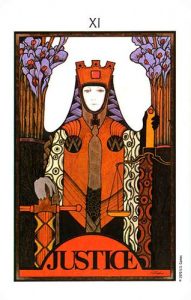
Thanks to U.S. Games Systems, Inc., for kind permission to use the image of Justice from the AQUARIAN TAROT.

Posted in News, Notes & Quotes | Comments Off on Summer Writing Contests and Other Calls for Submission (aka: In the Court of Editorial Opinion)

Memoir Writing: Telling the Truth

Memoir Writing Prompt

THE QUEEN OF SWORDS IS A STRAIGHT-UP TRUTH TELLER. And she’s not worried about offending people, either. But, while this may very well make her the patron saint of memoir writers, she knows it’s not necessarily easy—nor safe—to follow her lead. Memoirists may be wary of putting their truth on the page. They may be concerned others will judge them. Or, they may feel guilt about revealing the harmful (or deceitful, immoral, or criminal) behaviors of someone close to them. They may even fear retribution from such a person.   

Writing the truth can be a serious—and, sometimes, risky—business. That’s why the Queen of Swords recommended I include this in my Terms and Conditions: Writing is deep work that comes with its own risks and discoveries. While I will endeavor to support you in your writing, I am neither a therapist nor an attorney. However, as you continue on your writing path, you may find the services of one or both offer you valuable guidance.

So, yeah. Serious business.

If you find yourself stymied when wanting to tell your story while avoiding upsetting someone else, the Queen of Swords may be able to help you slice through. Hers is the sword of discrimination. It separates the hard, nutritious kernels of truth from the chaff of words written to please others. And she brooks no nonsense from family, friends, or coworkers when she’s doing her honorable work.

At least, not in her first draft.

You see, we travel a long road between our first, exploratory draft—in which we record as much of the truth as we can remember and feel and understand—and our final draft, polished and ready to send out for publication. And there are many rest stops in the miles between those drafts. Those rest stops are perfect places for us to pause and consider whether to hit delete on passages that feel too hot, too pointed, too dangerous, or to keep them intact—until our next revision, at any rate.

Tarot writing prompt

With the clear-eyed Queen of Swords as an uncompromising example, try this: Pull out a memory that stings. Perhaps it’s of a secret you were told to keep. Or maybe it’s a memory of a trusted person hurting you or someone else. Or of something you did, something about which you carry shame. Or fear. Or both.

Whatever you’re ready to uncover, write about it as fully as you can—just for yourself, for the moment. You might need to do this in increments. Start with ten minutes. Then return for another ten-minute session … and another and another, until you have all the parts of the story and the accompanying feelings on the page.

Take as long as you need. Days. Weeks. Months. Years.

While you’re in the process of this memoir writing prompt, you might want to hide your notebook or camouflage the file you’re creating. Do so, if it will make you feel safer. And when you review what you’ve written, if it’s too much, too hot, you might decide to delete or shred the story in its entirety. You might also, as suggested above, consult with a therapist or counselor as you journey along this path. Do whatever you need to make you feel safer, protected, supported.

With these caveats in mind, then, if you have a wound in your writer’s heart, consider lancing it with the sword of truth. It’s your life. Write it down.

I’ll go first, okay?

This is a story I’ve feared sharing, both because I might be judged harshly for my behavior and because in it I point at my father’s difficult behaviors. It’s a double-memoir-whammy-bind!

What happened is this: A long-lost relative contacted my family (damn you, Ancestory.com!). This relative had a particular interest in meeting my father. But they were my long-lost relative, too. And I got there first. Then, I opened my mouth and toads and snakes fell out as I described my early life with my father, who, good points/bad points, could be violent, and unpredictably so.

Soon after, my father died. Without this person ever contacting him.

For the next several years, I ran a losing race with guilt. But one night, as I was circling the track yet again, a friend sliced to the heart of the matter. “Did you tell that long-lost relative the truth about your father?” she asked. “Your own truth? As honestly as you could”

Well, yes. I did.

“Then,” my friend said, “it is what it is. People make their own choices.”

She’s right. My father chose to act the way he did. I chose to disclose. The relative chose not to connect.

It is what it is.

So, while this story isn’t actually about writing down the truth (although, I have now written it down), it is about the risks we take when we decide to share our truth, and about the possible consequences of doing so.

The fear of such potential consequences keeps many would-be memoirists from writing their stories in the first place. Embarking on a memoir can raise a lot of questions, like: Whom will this hurt? How will I be perceived? Will I ruin relationships—either my own or those of the people about whom I write? Even if I’m telling the truth?

When I speak with a writer who faces questions like these, I never suggest they cast aside these considerations and just publish their raw truth—consequences and concerns and family be damned. But, first draft? The one only you will read? There, you can look your truth square in the eye and let the vorpal blade [go] snicker-snack.” Then, in a cooler light, see whether or how or if it serves you to release that truth into the world.

Memoir writing resources

Mary Karr is a brilliantly honest memoirist (and poet). You might find her THE ART OF MEMOIR a helpful read.

The post “How True and Factual Does Your Memoir Have to Be? 5 Principleson Jane Friedman’s blog offers up some memoiristic nuts and bolts for your consideration. It is written by Brenda Peterson and Sarah Jane Freymann, who co-authored YOUR LIFE IS A BOOK.

The National Association of Memoir Writers considers “Challenges and Truth in Memoir” in the linked article.

Hire a memoir writing coach. Get in contact with me to learn more!

***

Thanks to U.S. Games Systems, Inc., for kind permission to use the image of the Queen of Swords from the RIDER WAITE (SMITH) TAROT.

1 2 3 4 5 8

Copyright ©2026 Jamie Morris LLC| Contact | Privacy Policies | Terms & Conditions